Homemade almond milk is one of the easiest plant-based staples you can make in your own kitchen, and it only takes raw almonds, water, and a blender.
You will find the full recipe card below with exact measurements and timing, but this guide walks you through every step so you understand the why behind each one.
Why Make Homemade Almond Milk
Store-bought almond milk often contains gums, stabilizers, and added sugars that homemade versions skip entirely.
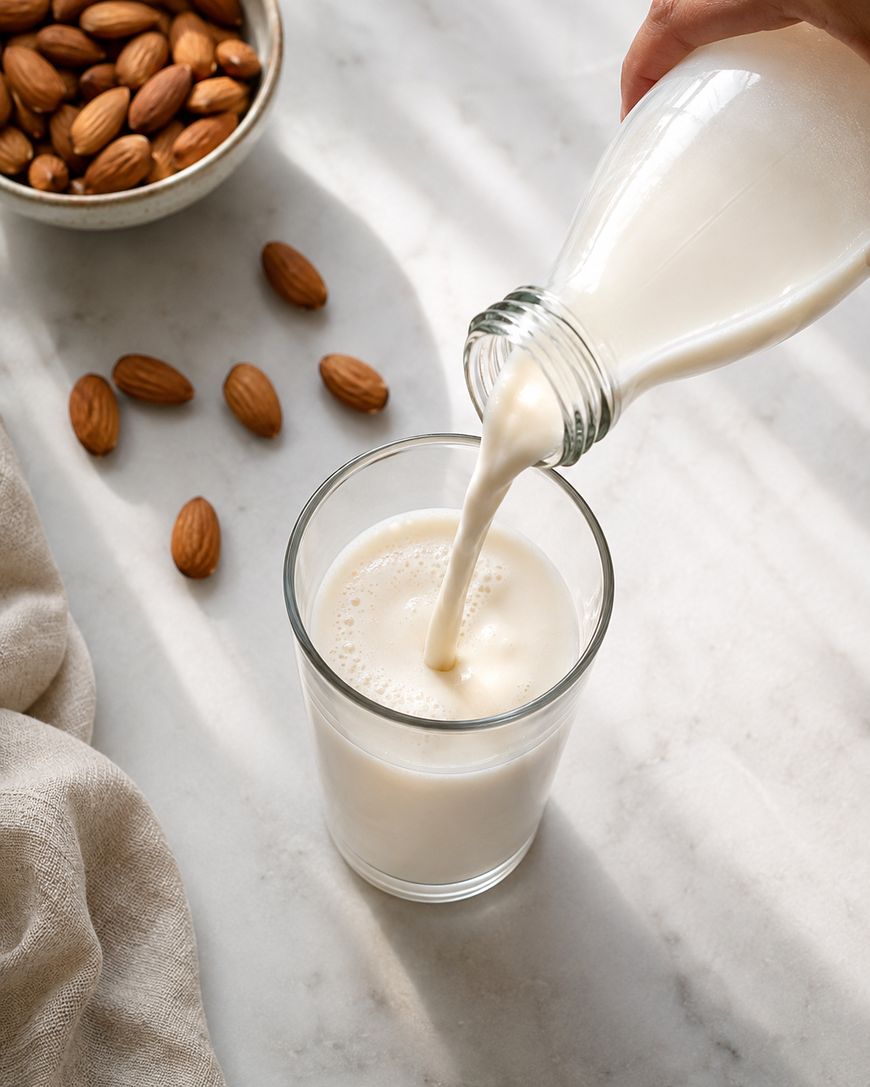
When you make homemade almond milk yourself, you control the ratio of almonds to water, the sweetness level, and the flavor additions like vanilla or cinnamon.
It also costs less per batch than most cartons of Silk or Califia Farms almond milk once you are buying almonds in bulk.
What You Need for Homemade Almond Milk
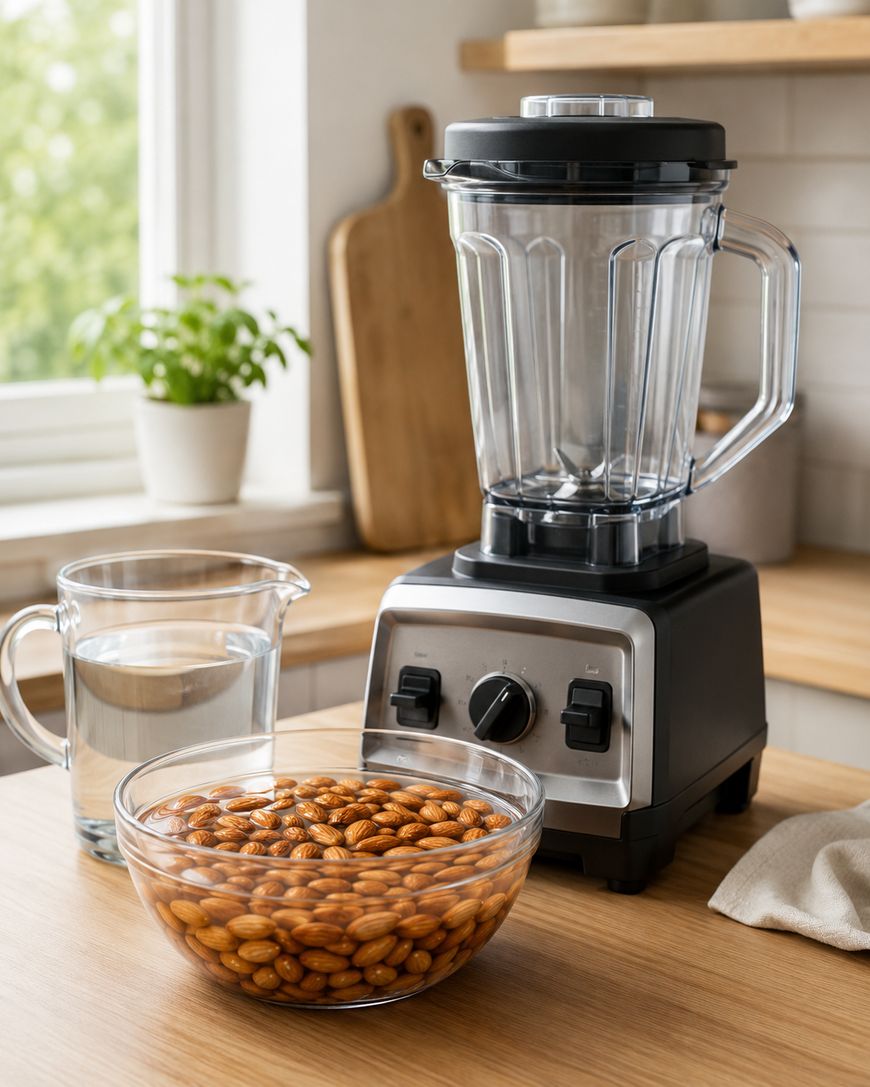
The base of any homemade almond milk is raw almonds and filtered water, soaked together until the almonds soften.
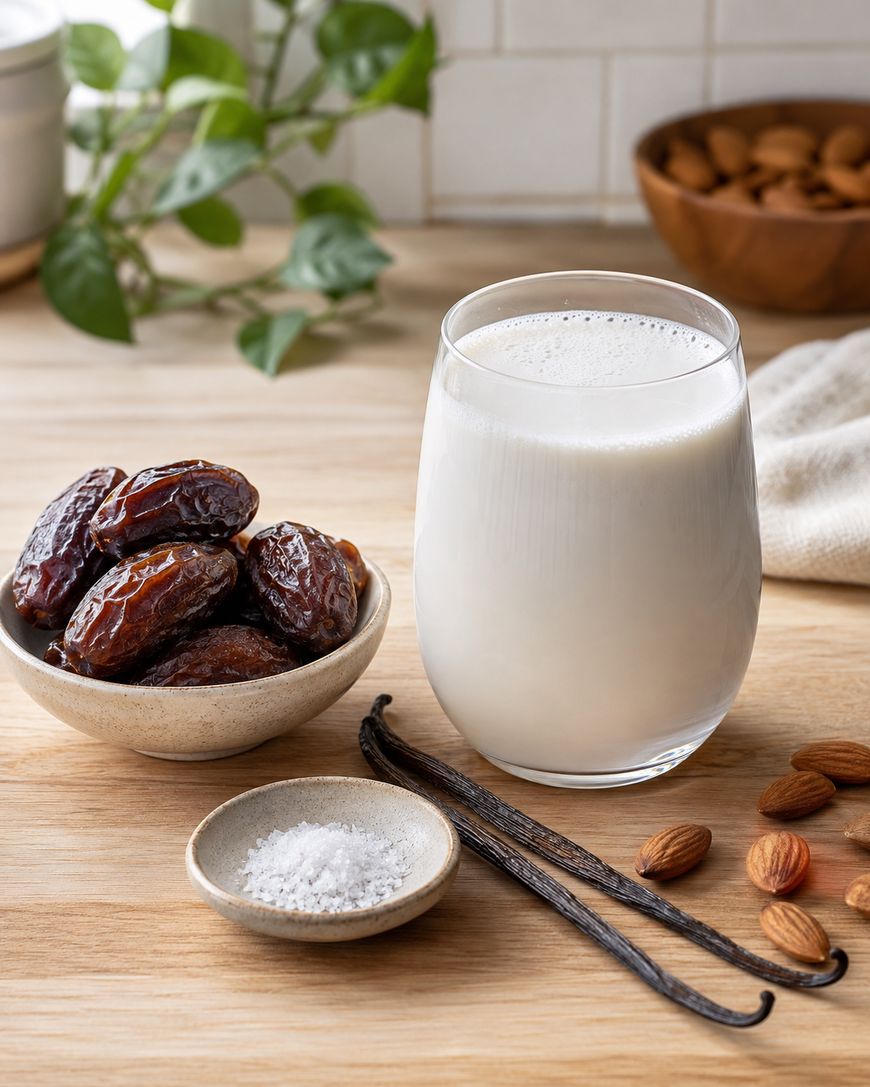
A high-speed blender, such as a Vitamix or Blendtec, breaks the almonds down into a smooth slurry more efficiently than a standard blender, though a regular blender will still work with a slightly longer blend time.
You will also need a nut milk bag or a few layers of cheesecloth to strain the pulp from the liquid, since this step is what separates almond milk from almond puree.
Optional additions like Medjool dates, pure vanilla extract, and a pinch of sea salt round out the flavor, while a dash of ground cinnamon adds warmth if you want a spiced version.
Soaking the Almonds
Raw almonds need to soak in water for at least 8 hours, and overnight soaking on the counter or in the fridge works well for most schedules.
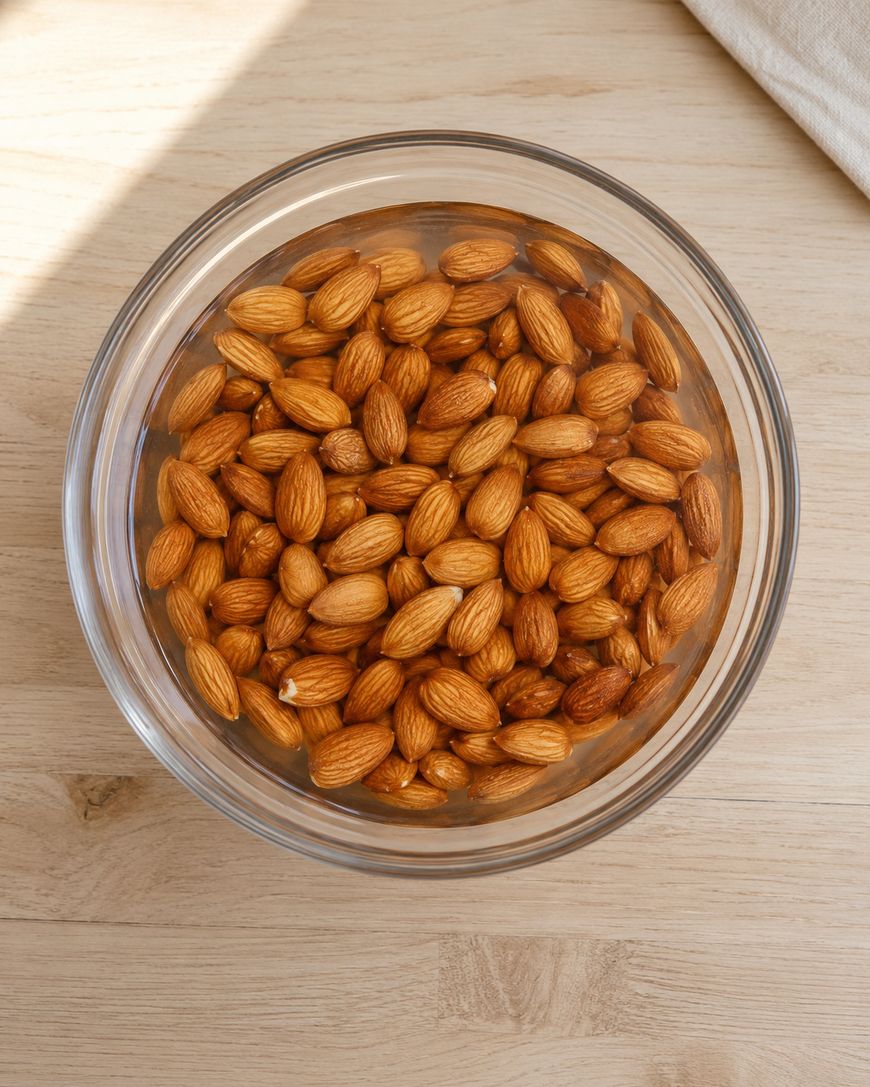
Soaking softens the almonds so they blend into a smoother liquid and also helps release phytic acid, which some people find easier to digest once removed.
If you are short on time, a quick soak in hot water for 1 hour can substitute, though the texture will be slightly less silky than an overnight soak.
Drain and rinse the soaked almonds thoroughly before blending, since the soaking water can taste slightly bitter if left in.
Blending the Almond Milk
Add the drained almonds to your blender along with fresh, cold filtered water using a ratio of about 1 cup almonds to 4 cups water for a medium-creamy consistency.
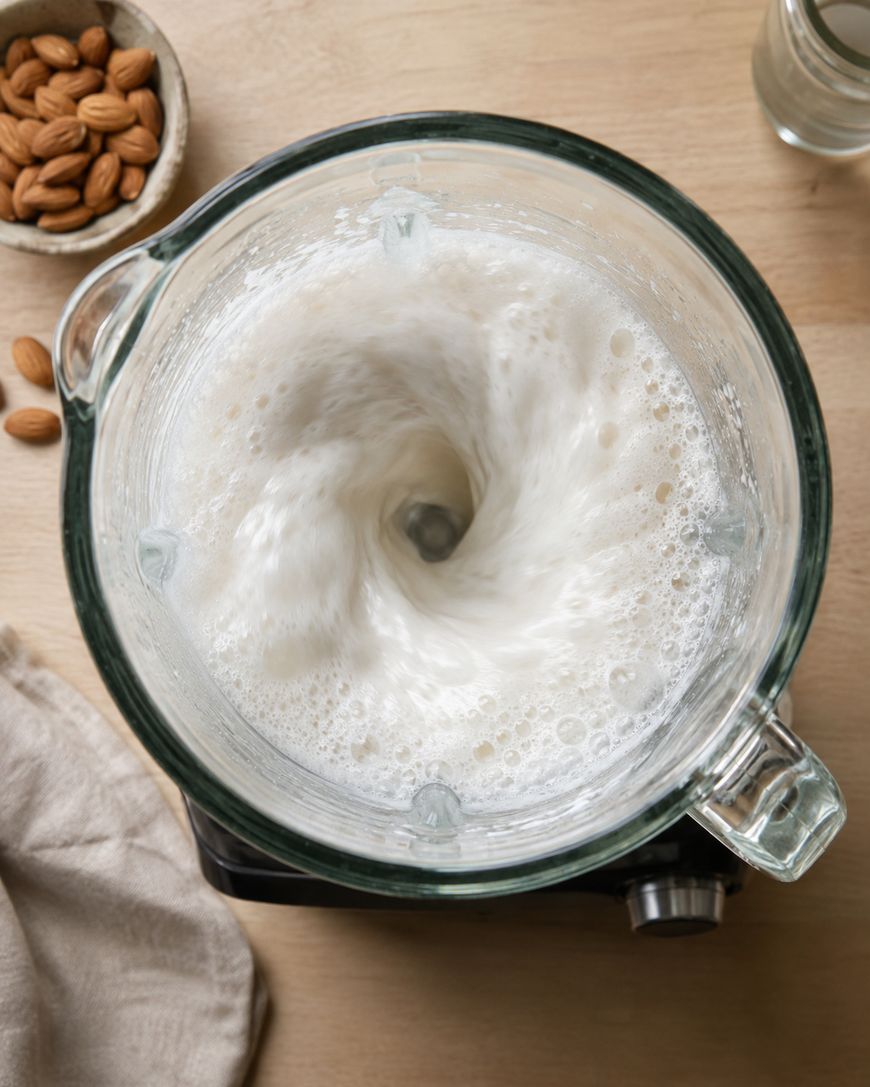
Blend on high for 1 to 2 minutes, until the mixture looks pale and frothy and you can no longer see distinct almond pieces floating in it.
If you want a richer, creamier homemade almond milk, reduce the water slightly to 3 cups, or add an extra quarter cup of almonds to the same amount of water.
Straining for a Smooth Texture
Pour the blended mixture into a nut milk bag set over a large bowl or pitcher, then squeeze firmly from the top down to push the liquid through while the pulp stays trapped inside the bag.
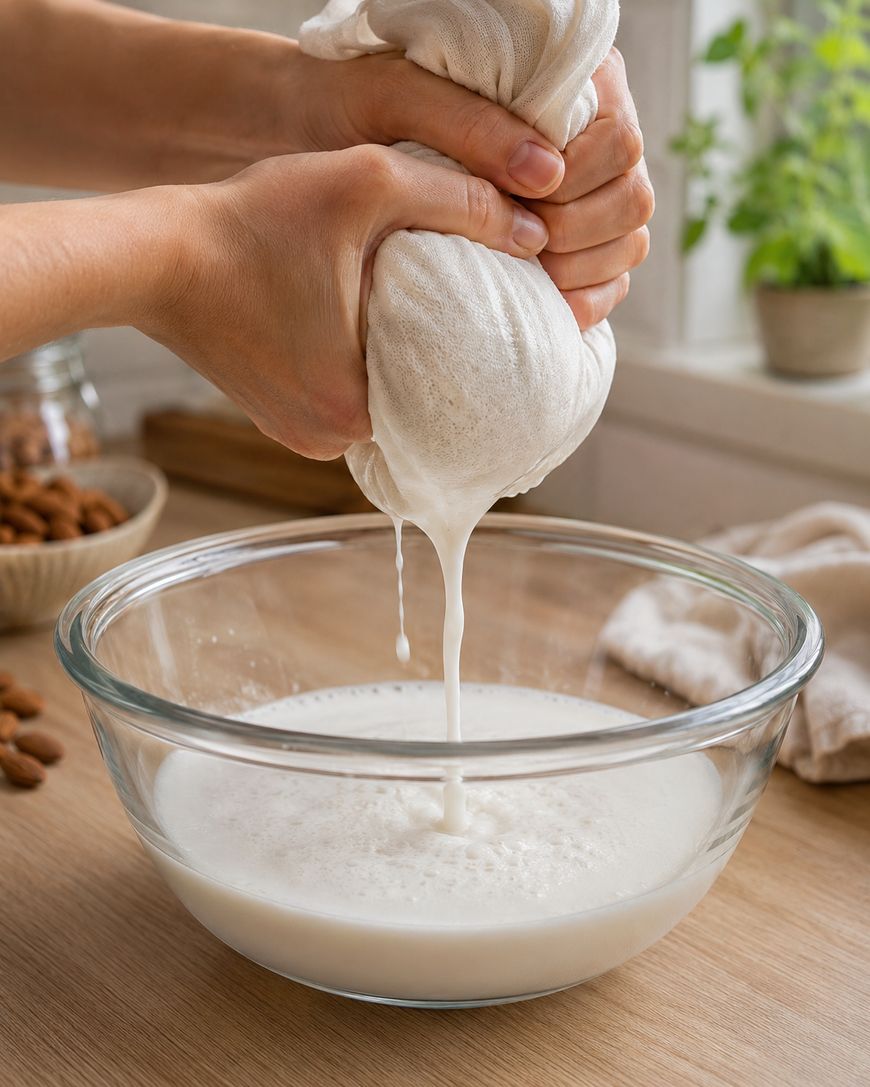
This step takes a few minutes of steady squeezing, and it is the difference between a gritty drink and a genuinely smooth homemade almond milk.
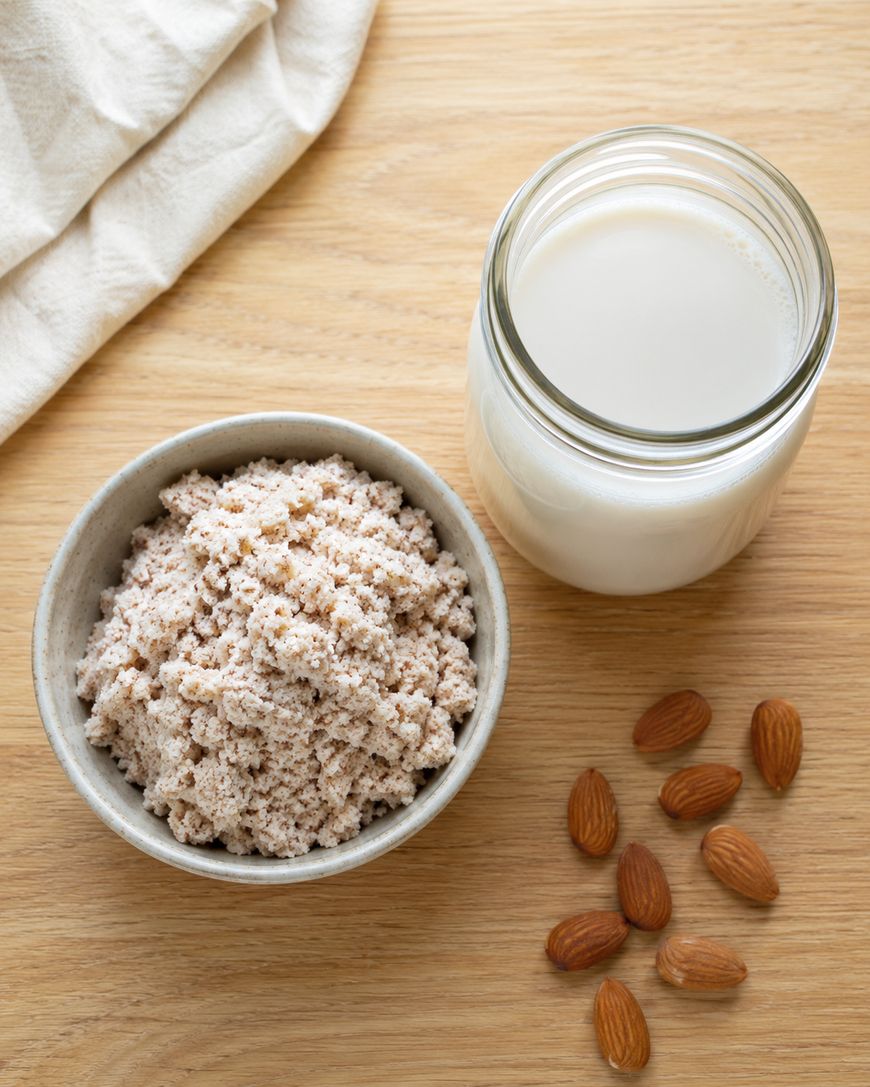
Save the leftover almond pulp for baking, since it works beautifully stirred into oatmeal, blended into smoothies, or dried out and used as almond flour in muffins or energy balls.
Sweetening and Flavoring
Once strained, homemade almond milk is technically finished, but most people prefer to add a little sweetness and flavor before storing it.
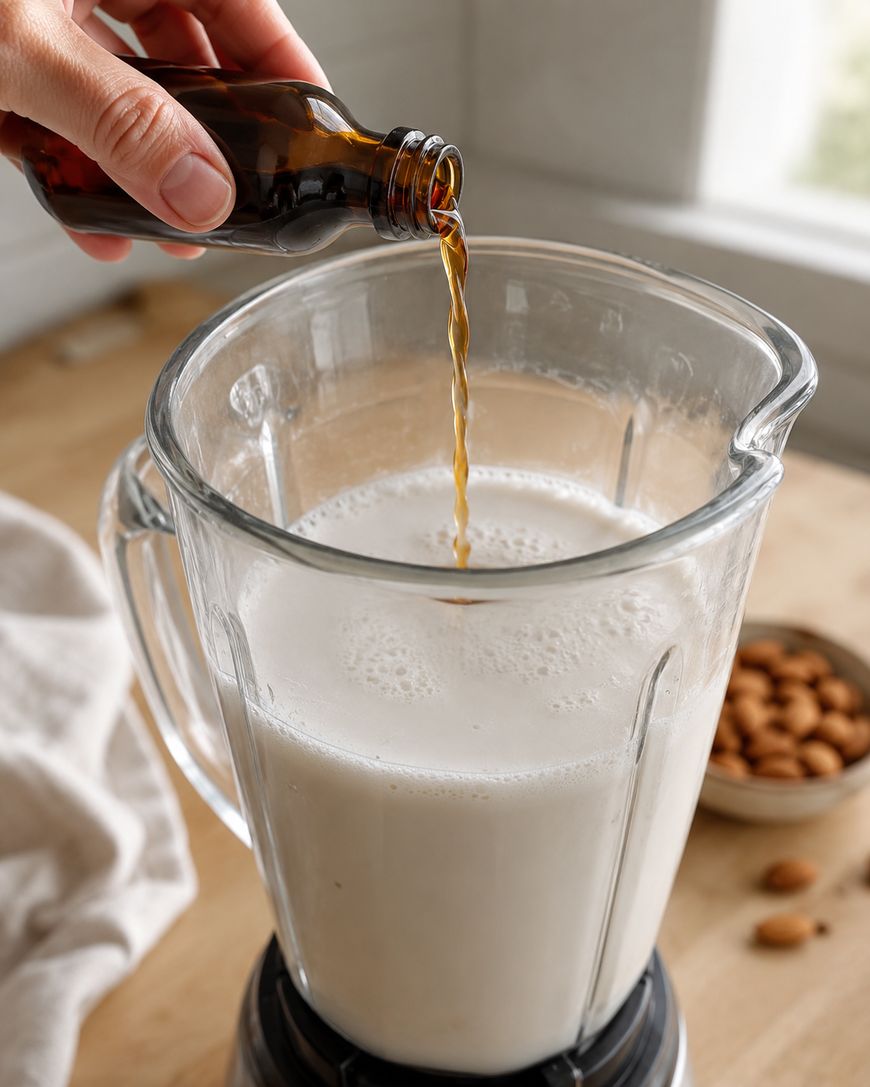
Blend the strained milk briefly with 2 pitted Medjool dates, a teaspoon of pure vanilla extract, and a pinch of sea salt for a naturally sweetened version that tastes close to the vanilla almond milk found in stores.
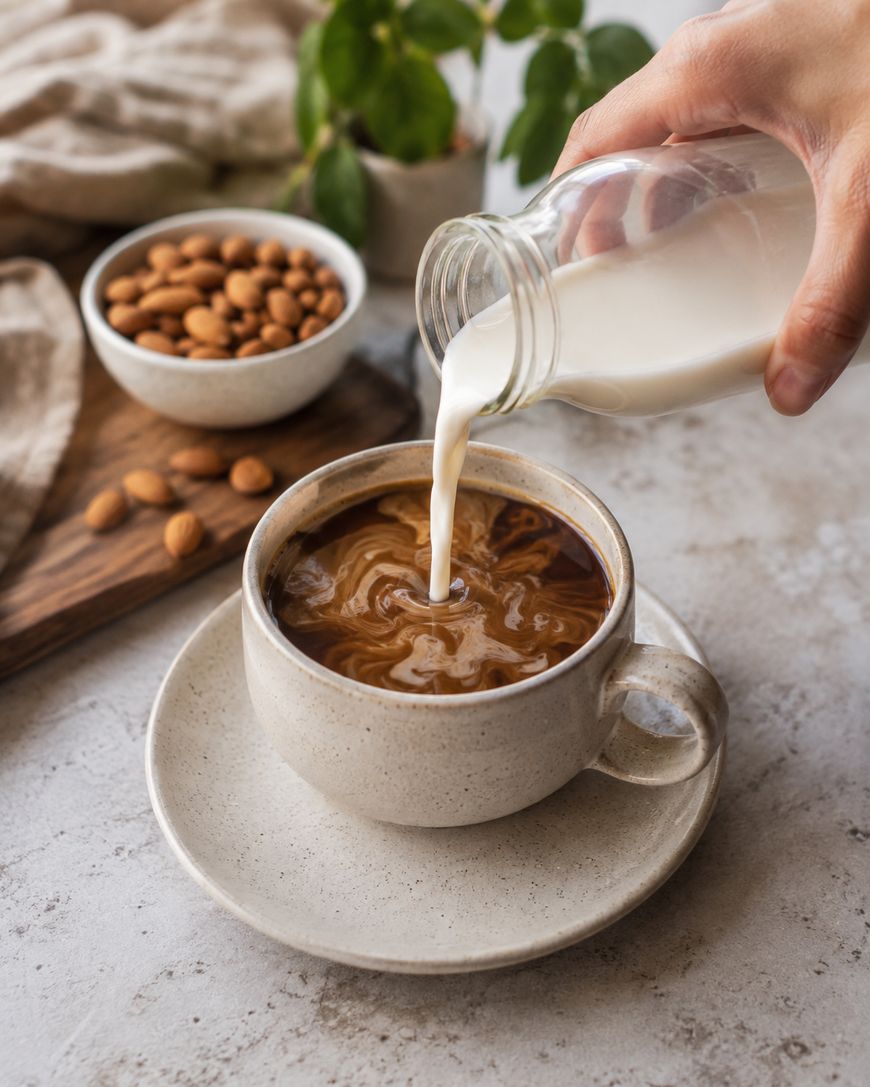
For an unsweetened version, simply skip the dates and vanilla and store the milk plain, which works well in savory recipes or coffee.
Variations on Homemade Almond Milk
A chocolate version comes together by blending in 2 tablespoons of cacao powder and a date or two after straining.
A cinnamon-vanilla version, popular around the holidays, uses a full teaspoon of ground cinnamon along with the vanilla and dates for a horchata-style flavor.
You can also swap raw almonds for raw cashews if you want an even creamier, nut-milk-bag-free option, since cashews blend smooth enough that straining becomes optional.
Storing Homemade Almond Milk
Store your finished homemade almond milk in a sealed glass jar or bottle in the refrigerator, where it stays fresh for 4 to 5 days.
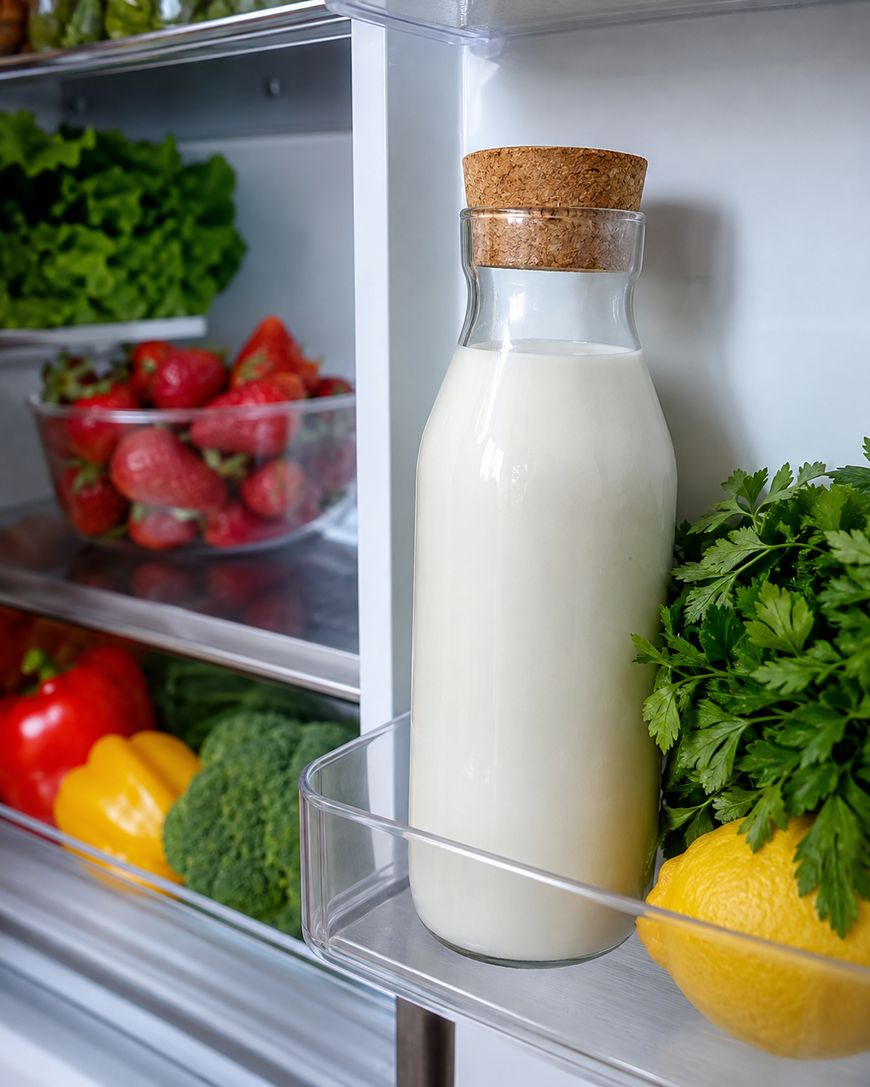
Shake well before each use, since natural separation happens without the stabilizers found in store-bought cartons.
Homemade almond milk does not freeze particularly well, as the texture tends to separate and turn grainy once thawed, so it is best made in batches you can finish within the week.
Ways to Use Homemade Almond Milk
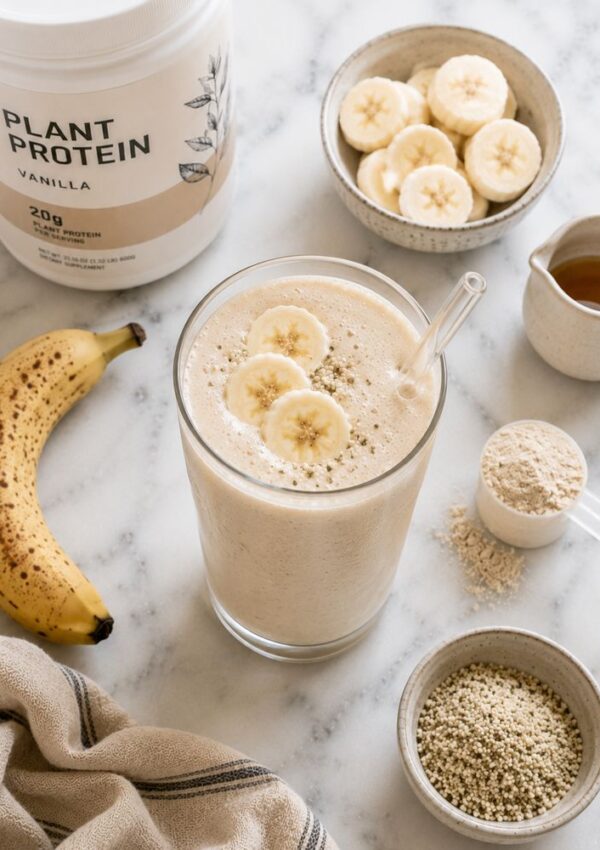
Pour it over granola or high-protein chia pudding, stir it into your morning coffee or matcha latte, or use it as the liquid base in smoothies alongside spinach and frozen banana.
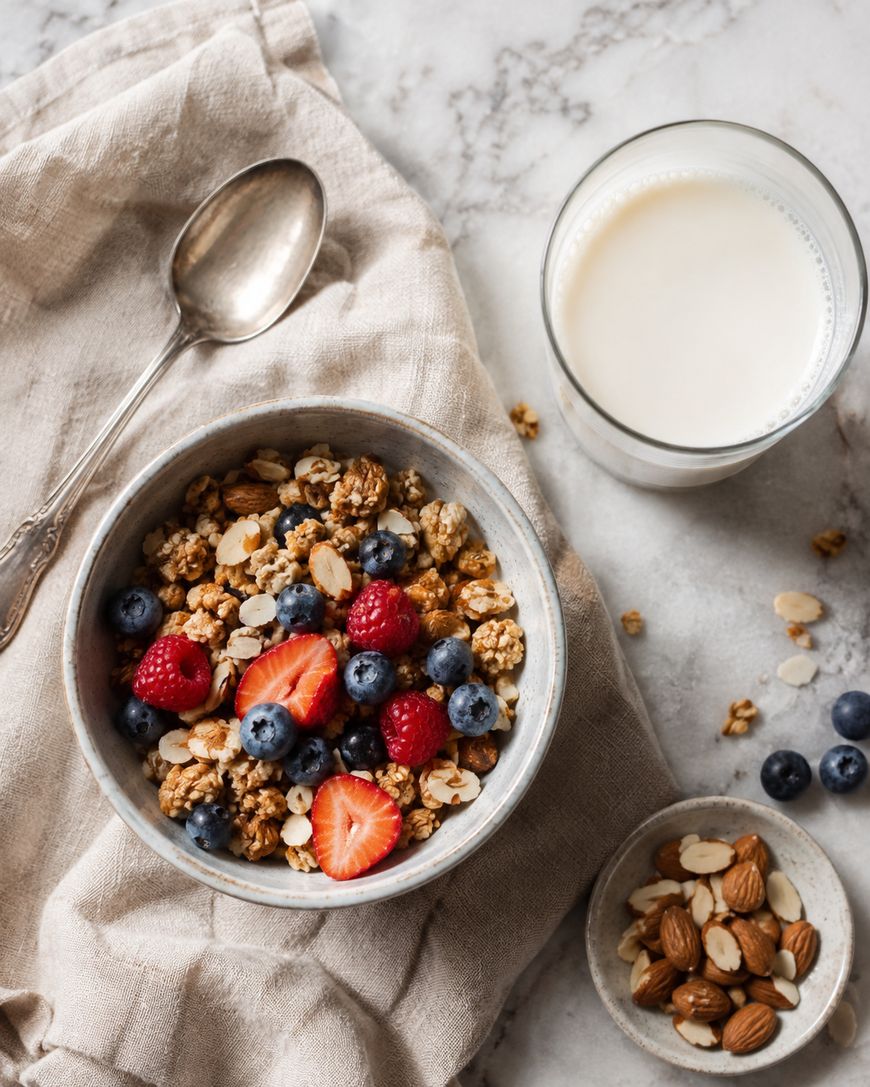
It also works as a dairy-free substitute in baking recipes like vegan banana bread or protein apple muffins, cup for cup in place of regular milk.
Where Homemade Almond Milk Comes From
Almond milk has roots stretching back to medieval Europe and the Middle East, where it served as a shelf-stable dairy substitute during religious fasting periods and long journeys before refrigeration existed.
Its modern popularity took off over the last two decades as more people sought dairy-free and plant-based options, turning what was once a niche pantry staple into a mainstream refrigerator item.
Making it at home today connects back to that original, simple version: just nuts, water, and a little patience.
Ready to see the exact measurements and timing laid out step by step? Use the recipe card below to make your own batch of homemade almond milk today.
Homemade Almond Milk
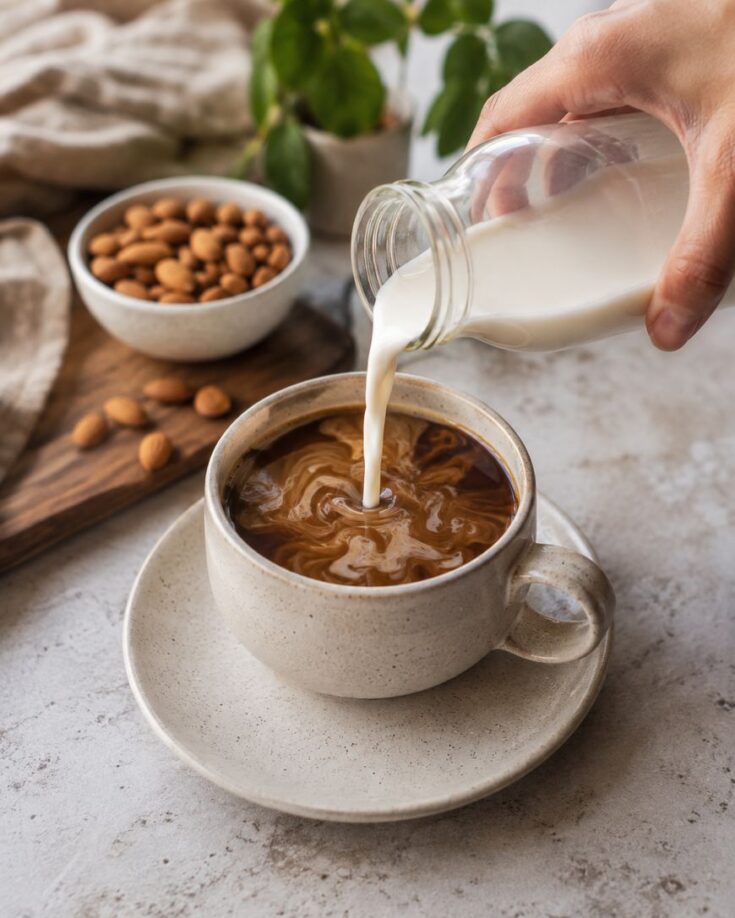
A simple, creamy homemade almond milk made with just raw almonds, water, and a touch of natural sweetness from Medjool dates and vanilla.
Ingredients
- 1 cup raw almonds, soaked overnight
- 4 cups filtered water, plus more for soaking
- 2 Medjool dates, pitted
- 1 teaspoon pure vanilla extract
- 1 pinch sea salt
Instructions
- Place the raw almonds in a bowl and cover with water. Soak at room temperature or in the fridge for at least 8 hours or overnight.
- Drain and rinse the soaked almonds thoroughly under cold water.
- Add the almonds and 4 cups fresh filtered water to a high-speed blender.
- Blend on high for 1 to 2 minutes, until smooth and frothy.
- Pour the mixture through a nut milk bag set over a large bowl, squeezing firmly until all the liquid is extracted.
- Rinse the blender, then return the strained milk to it along with the Medjool dates, vanilla extract, and sea salt.
- Blend again for 20 to 30 seconds, until the dates are fully incorporated.
- Pour into a sealed glass jar or bottle and refrigerate.
- Shake well before each use and enjoy within 4 to 5 days.
Notes
For an unsweetened version, skip the dates and vanilla. Save the leftover almond pulp for baking or smoothies.
Nutrition Information:
Yield:
5Serving Size:
1 cupAmount Per Serving: Calories: 60Total Fat: 4gSaturated Fat: 0.5gSodium: 35mgCarbohydrates: 5gFiber: 1gSugar: 3gProtein: 2g
Homemade Almond Milk Q&A
Do I need to soak the almonds before making almond milk?
Yes, soaking softens the almonds so they blend smoothly and strain cleanly.
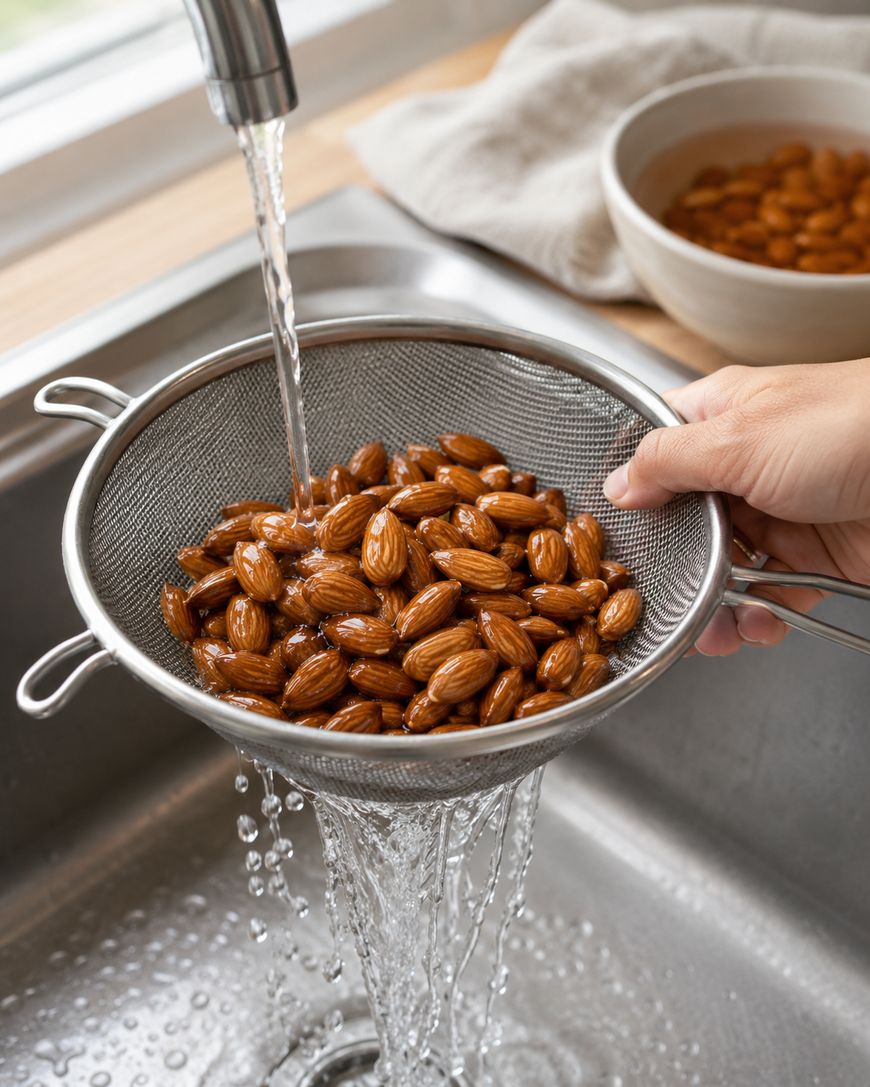
Skipping this step usually results in a grittier texture even after straining.
Can I make homemade almond milk without a nut milk bag?
You can use a fine mesh strainer lined with a few layers of cheesecloth instead.
A nut milk bag is faster and yields a smoother result, but cheesecloth works in a pinch.
How long does homemade almond milk last in the fridge?
It stays fresh for 4 to 5 days when stored in a sealed glass container.
Always give it a shake before pouring, since natural separation is normal.
Is homemade almond milk healthier than store-bought?
Homemade almond milk skips the added gums, stabilizers, and preservatives found in many cartons.
It does have less calcium and vitamin D than fortified store-bought versions, so consider that if those nutrients matter to your diet.
What can I do with the leftover almond pulp?
Stir it into oatmeal or smoothies, or dry it out in a low oven and use it as almond flour in baking.
It also works well folded into energy balls or homemade granola.
Can I make a bigger batch of homemade almond milk at once?
Yes, simply scale the almond-to-water ratio up while keeping the same 1 to 4 proportion.
Just make sure your blender and nut milk bag can handle the larger volume in one batch.
Homemade almond milk is a simple, affordable way to bring a creamy, dairy-free staple into your kitchen with just two main ingredients and a little time. Once you get the ratio and straining technique down, you will likely never go back to the carton version.

Leave a Reply