Cauliflower pizza crust turns a humble head of cauliflower into a sturdy, low carb base you can pile high with toppings.
This version is fully plant-based, and the recipe card below has the exact measurements and bake times so you can get started right away.
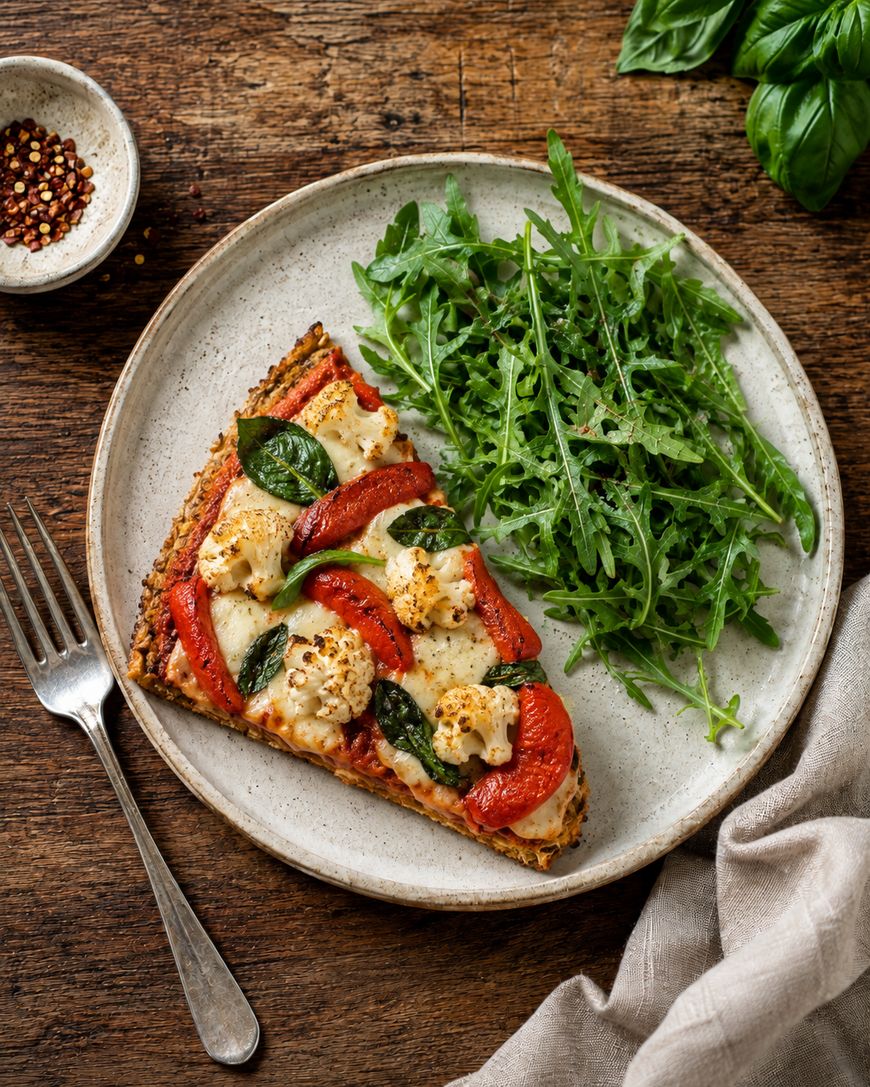
Why Cauliflower Pizza Crust Works
Cauliflower pizza crust works because riced cauliflower, once cooked and drained of excess moisture, behaves almost like a grain when bound together.
The trick that separates a soggy, crumbly crust from a crispy, foldable one is moisture control, and you will see that theme repeated throughout this guide.
The Role of Riced Cauliflower
Riced cauliflower is the foundation of any good cauliflower pizza crust, and you can make your own with a box grater or food processor, or buy it pre-riced from the produce section.
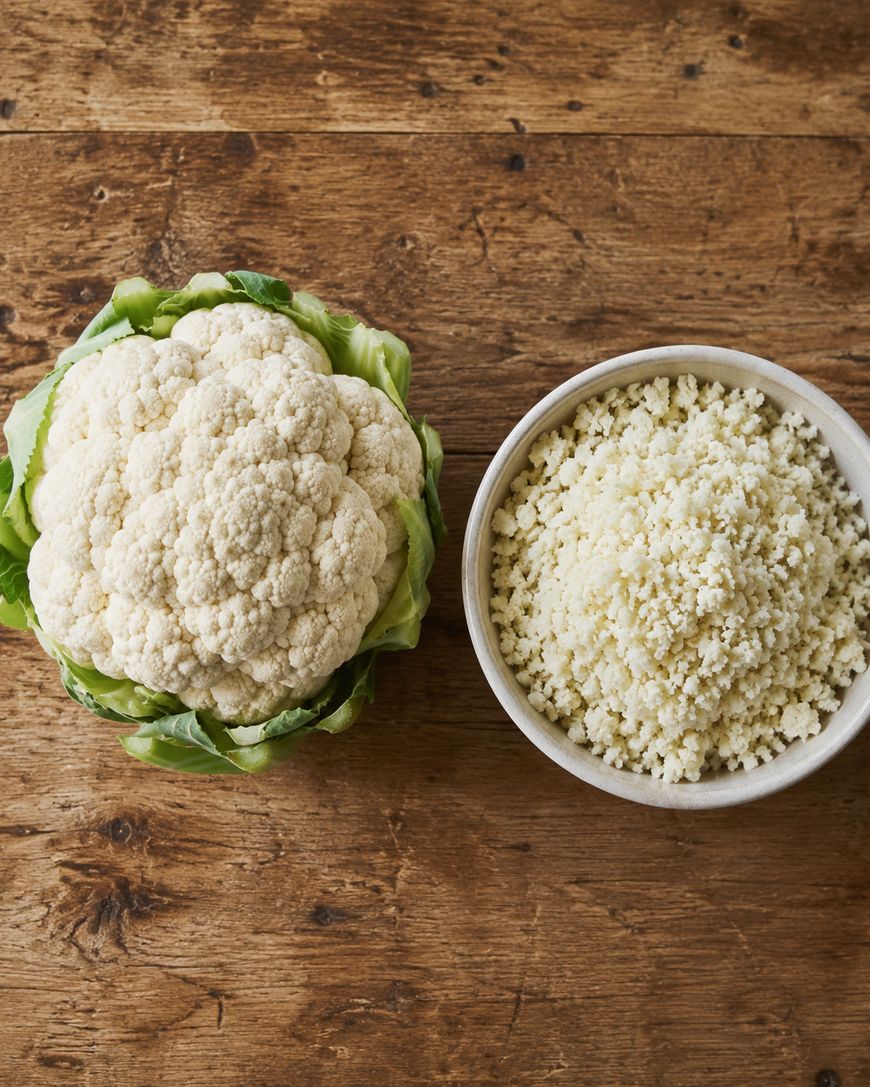
One medium head of cauliflower yields roughly four cups of rice, which is the right amount for a standard 12-inch crust.
Choosing a Vegan Binder
A traditional cauliflower crust relies on egg and mozzarella to hold together, so this vegan version swaps in a flax egg and a blend of cashew cream and nutritional yeast for structure and cheesy flavor.
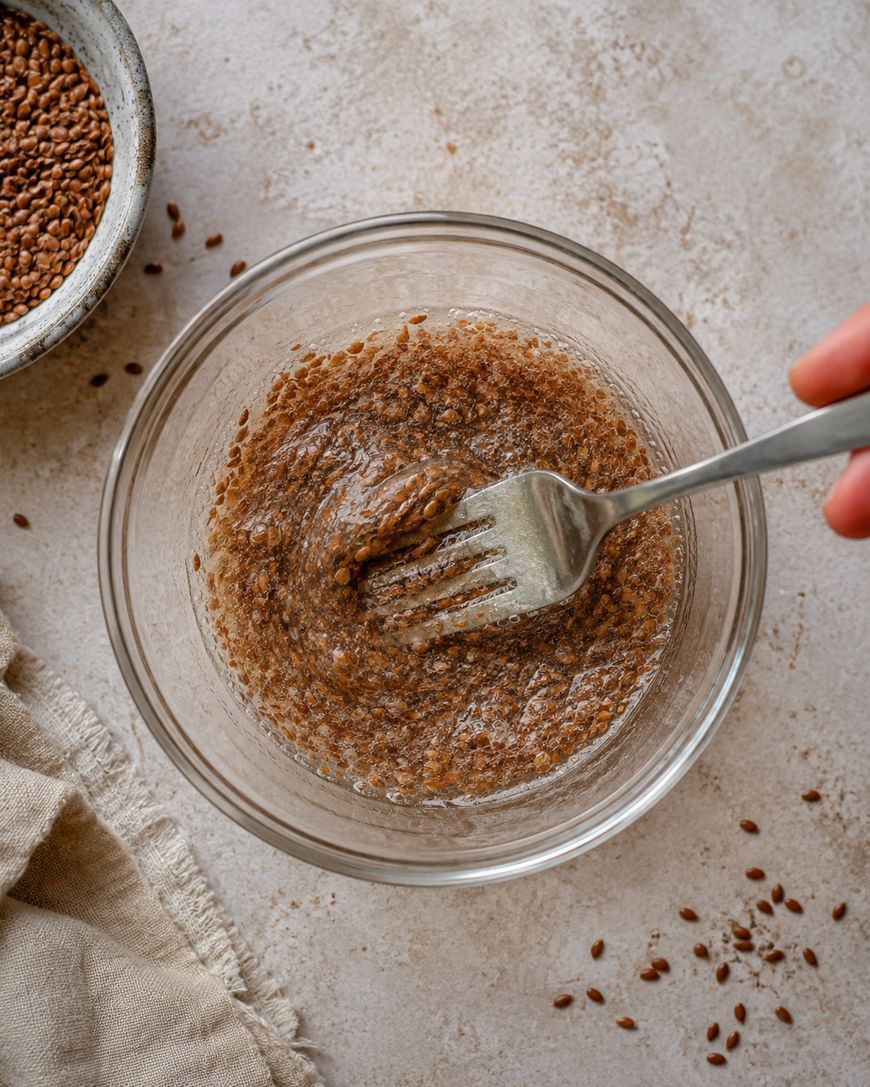
The flax egg, made from one tablespoon of ground flaxseed whisked with three tablespoons of water and left to gel for five minutes, mimics the binding power of a real egg surprisingly well.
Ingredients You Will Need
The full ingredient list with exact quantities lives in the recipe card, but here is what each component contributes to the final cauliflower pizza crust.
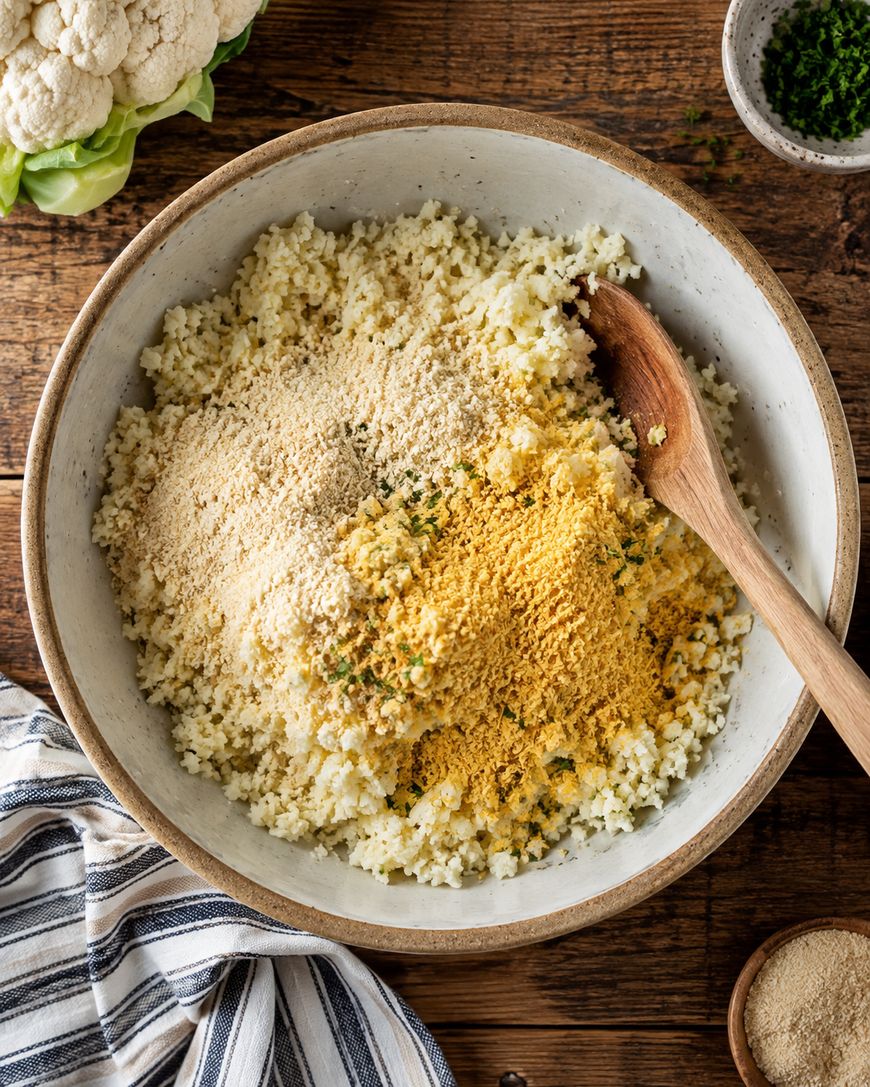
Riced cauliflower forms the bulk of the crust, almond flour adds structure and a subtle nuttiness, nutritional yeast brings a savory, cheese-like flavor, and a flax egg binds everything together.
Choosing Your Cheese Substitute
Nutritional yeast alone gives a mild cheesy note, but folding in a few tablespoons of cashew cream thickens the batter and adds richness.
If you keep store-bought vegan mozzarella shreds on hand, a quarter cup mixed into the crust itself adds even more meltiness once baked.
How to Make Cauliflower Pizza Crust
Making cauliflower pizza crust from scratch is a three-stage process: steam the cauliflower rice, squeeze out the moisture, then bind and bake.
Skipping any one of these stages is the most common reason a cauliflower crust turns out soggy, so we walk through each one below.
Step One: Steam and Cool
Steam the riced cauliflower for five to six minutes, just until tender, then spread it on a baking sheet to cool for ten minutes.
Cooling the rice before squeezing it prevents burned hands and also lets excess steam escape, which makes the next step easier.
Step Two: Squeeze Out the Moisture
Wrap the cooled cauliflower rice in a clean kitchen towel or several layers of cheesecloth and squeeze hard over the sink.
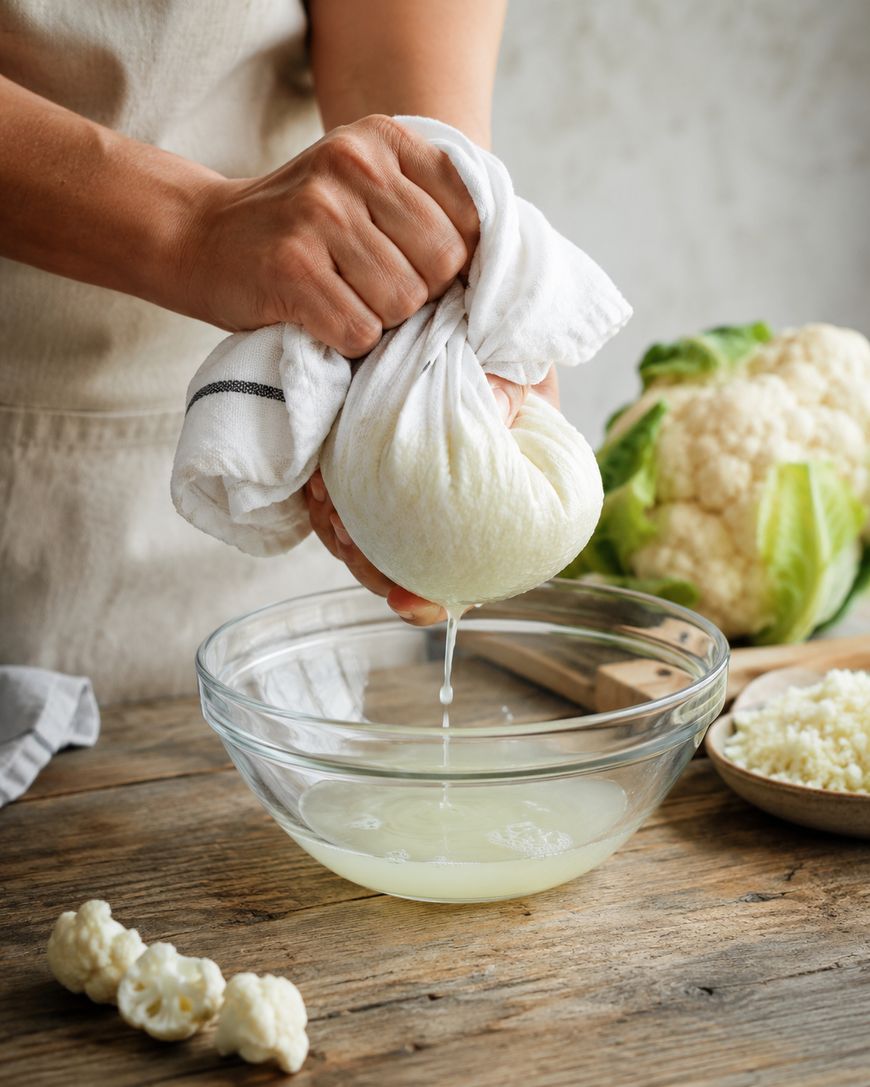
You are aiming to remove at least a half cup of liquid, and this single step determines whether your crust holds together or falls apart.
Step Three: Mix and Shape
Combine the squeezed cauliflower rice with almond flour, nutritional yeast, cashew cream, flax egg, garlic powder, oregano, and salt in a large bowl.
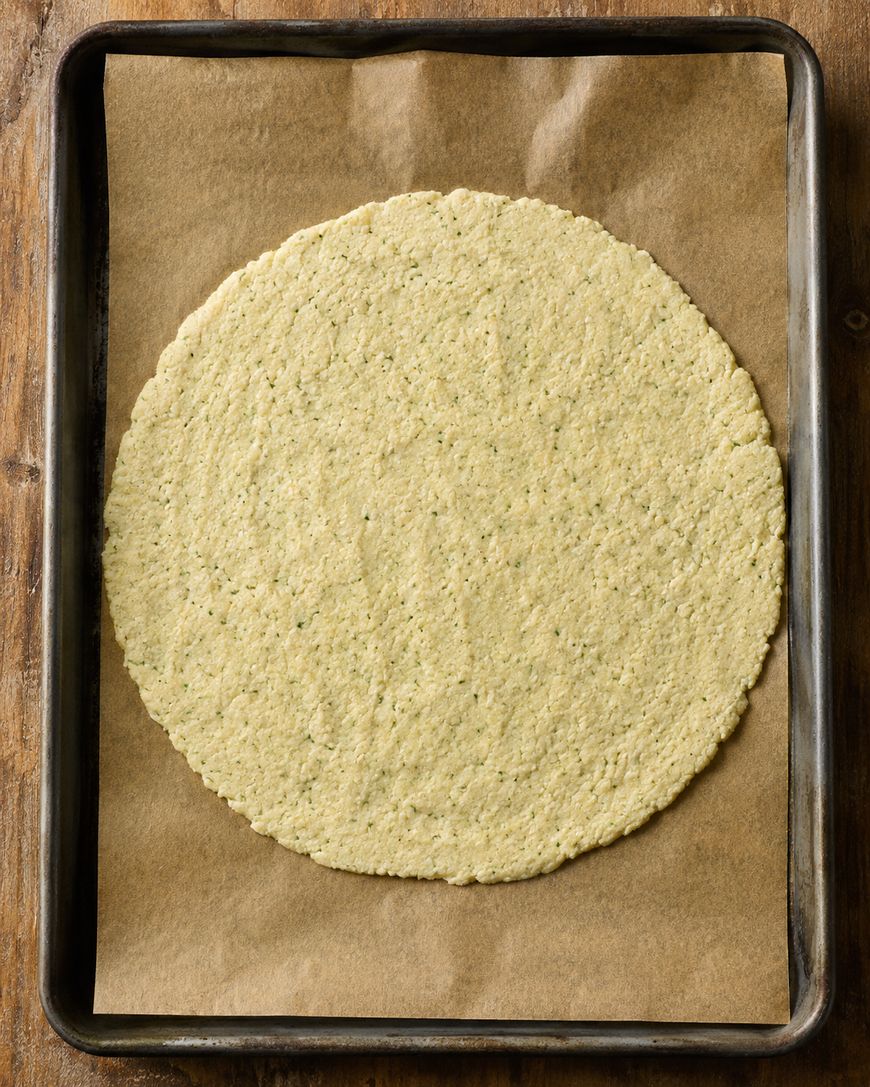
Press the mixture into a thin, even round directly on a parchment-lined baking sheet, keeping the edges slightly thicker than the center so they do not burn.
Step Four: Pre-Bake Before Topping
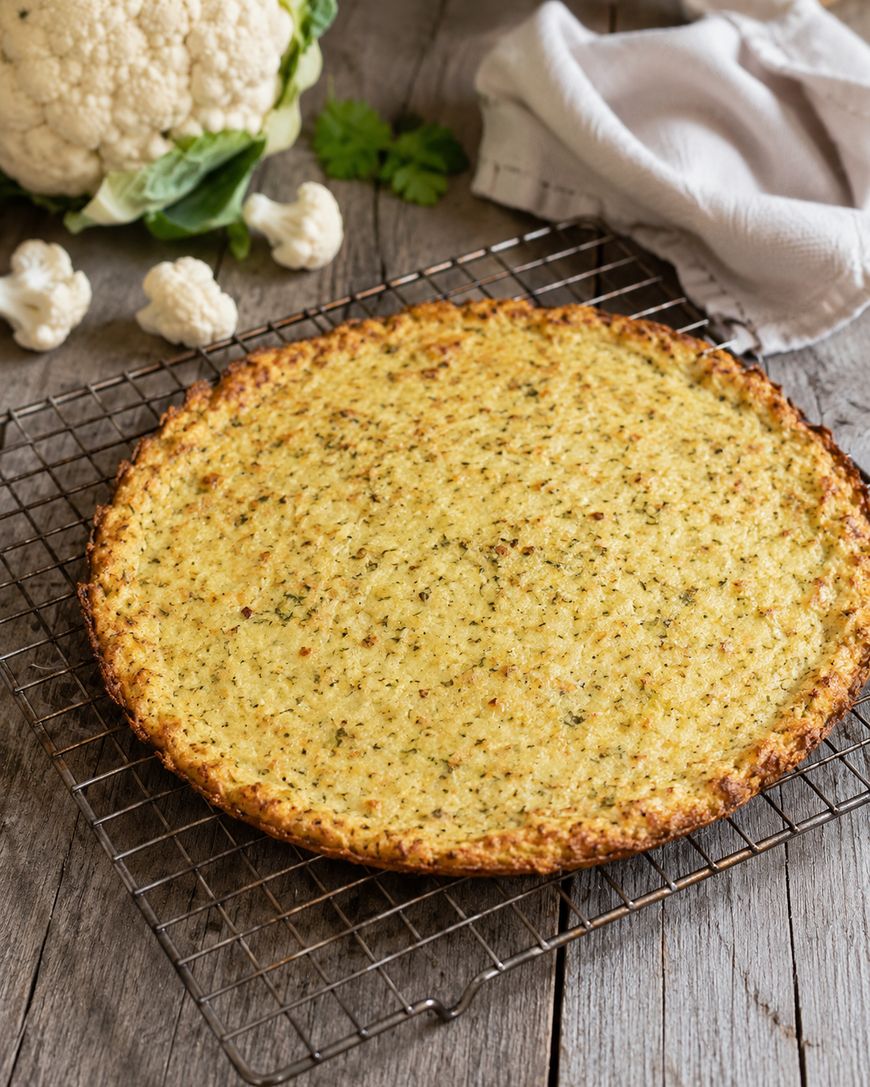
Bake the shaped crust at 425°F for 20 to 25 minutes, until the surface is golden and firm enough to lift with a spatula.
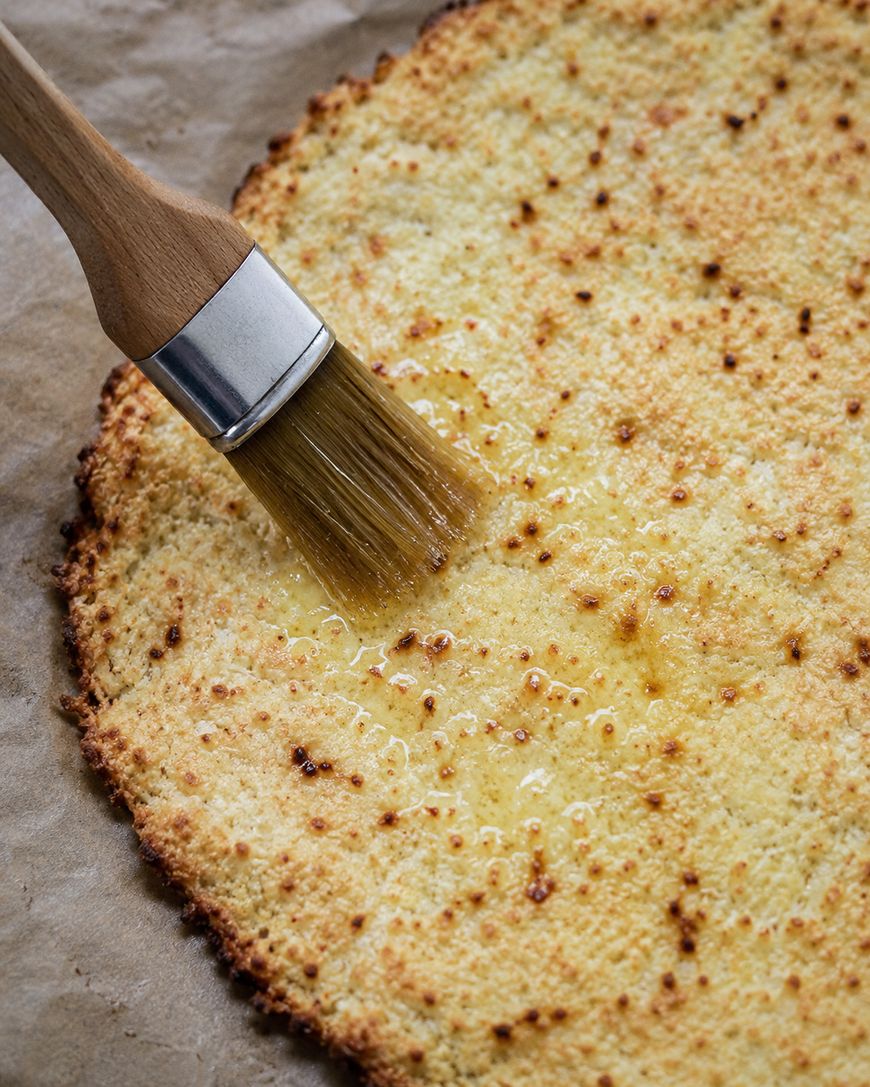
This pre-bake is non-negotiable, since adding wet toppings to an unbaked crust guarantees a soggy result no matter how well you drained the cauliflower.
Topping and Finishing the Pizza
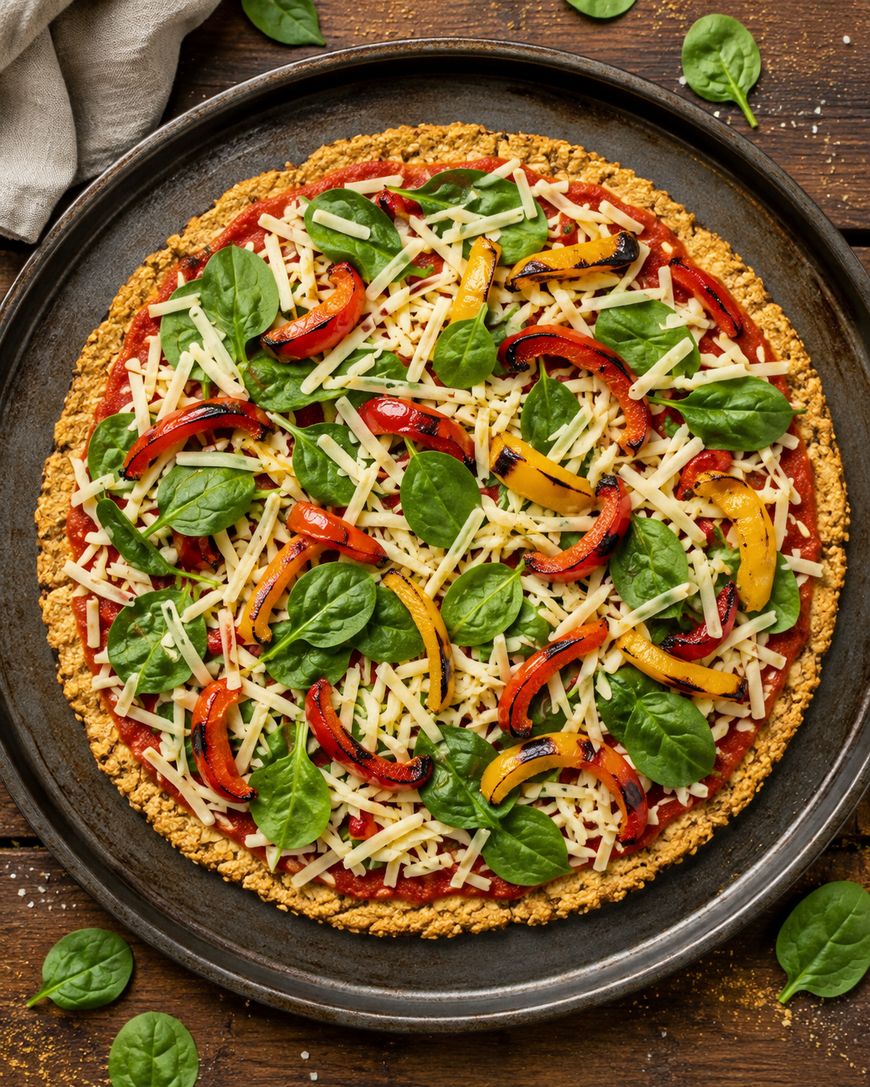
Once pre-baked, brush the crust lightly with olive oil, then add your favorite marinara, vegan cheese shreds, and vegetables.
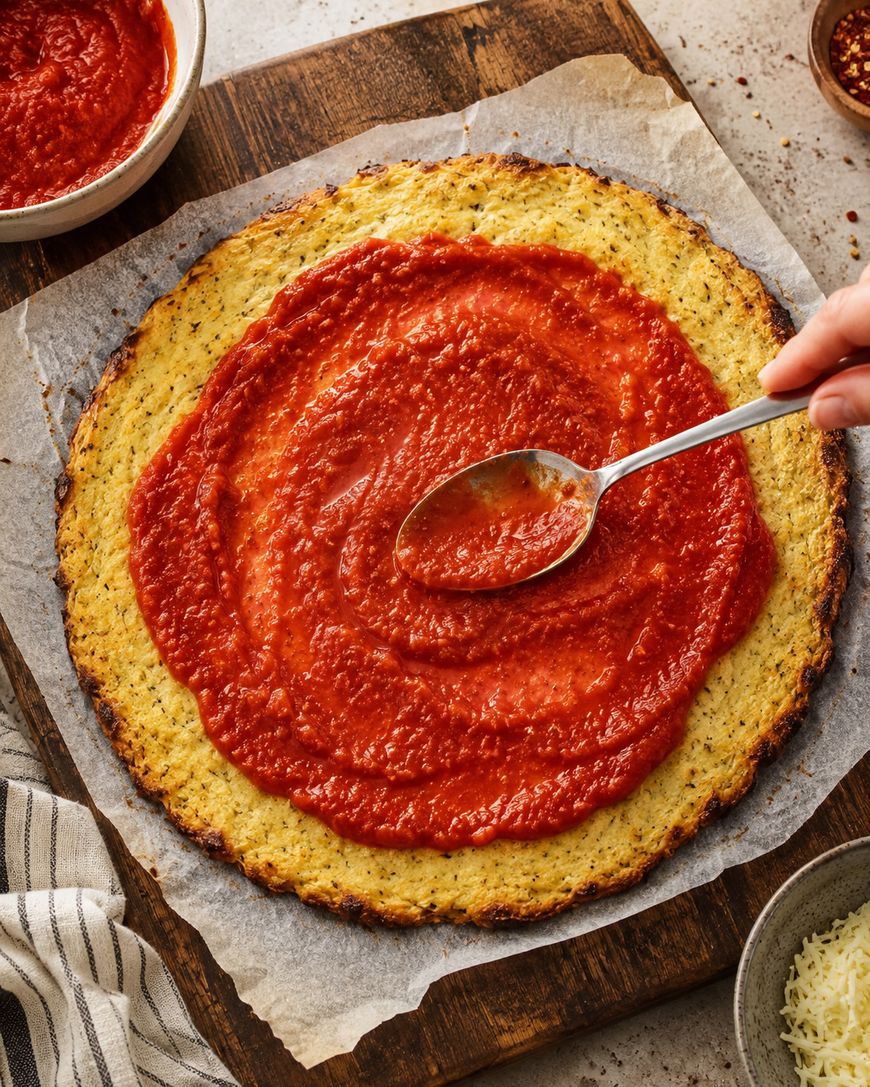
Return the topped pizza to the oven for another 10 to 12 minutes, until the cheese is melted and the edges are deeply golden.
Best Vegan Toppings
Roasted red peppers, caramelized onions, baby spinach, and thinly sliced mushrooms all hold up well on a cauliflower base without adding too much extra moisture.
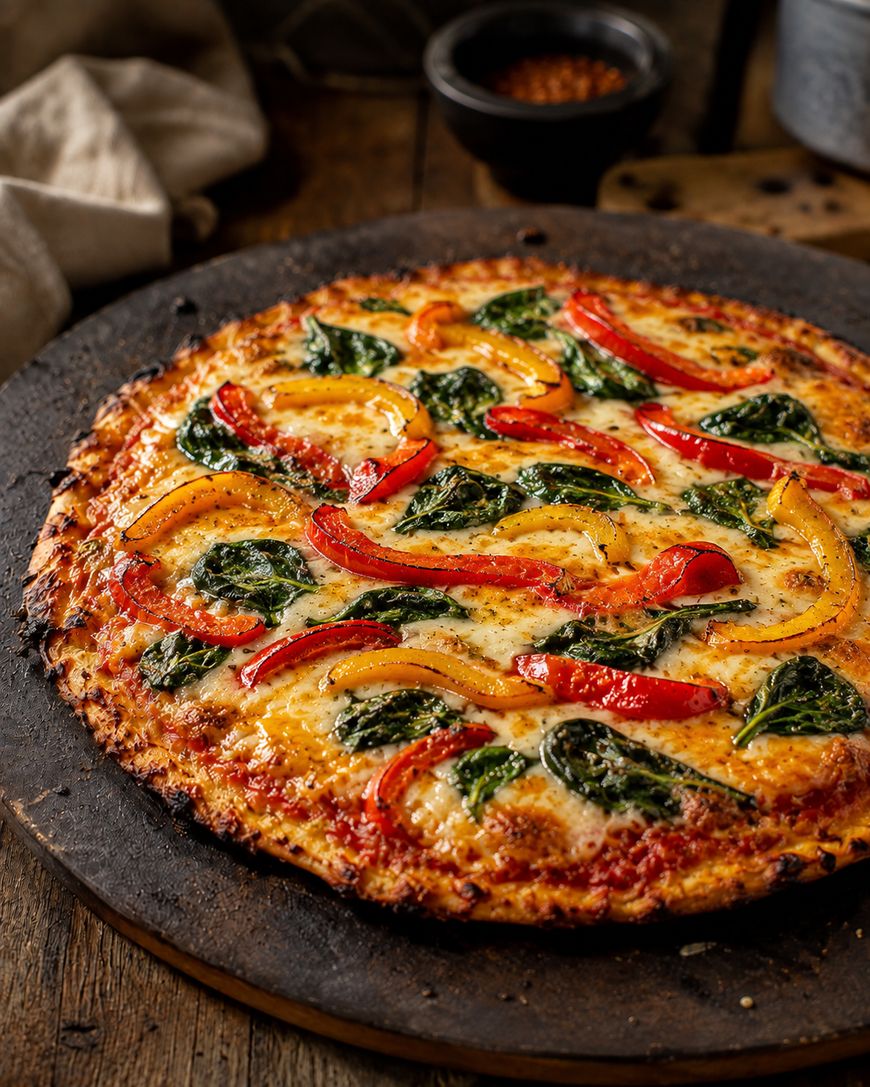
For a heartier pizza, a scattering of marinated artichoke hearts or plant-based sausage crumbles adds satisfying texture.
Variations and Substitutions
If you cannot find almond flour, oat flour works as a substitute, though the crust will be slightly less crisp.
Swap the cashew cream for canned coconut cream in a pinch, and if you are nut-free entirely, sunflower seed cream is a close match in both texture and flavor.
Making It Gluten Free
This crust is naturally gluten free as written, since almond flour replaces any wheat-based flour, but double check that your nutritional yeast and vegan cheese are certified gluten free if that matters for your household.
Making It Extra Crispy
For an even crispier crust, bake it on a preheated pizza stone rather than a baking sheet, and resist the urge to add extra oil to the mixture itself.
Storage and Reheating
Store leftover cauliflower pizza crust pizza, fully cooled, in an airtight container in the refrigerator for up to three days.
Reheat slices in a 375°F oven for eight to ten minutes, or in a skillet over medium heat, to restore crispness that a microwave cannot replicate.
Freezing the Crust
You can freeze the pre-baked crust on its own, wrapped tightly in plastic and foil, for up to two months.
Thaw it in the refrigerator overnight before topping and finishing it in the oven as directed above.
Serving Suggestions
Serve slices of cauliflower pizza crust alongside a simple arugula salad dressed with lemon and olive oil for a balanced meal.
A side of roasted vegetables or a light minestrone rounds out the plate nicely for a weeknight dinner.
The Origin of Cauliflower Crust
Cauliflower crust rose to popularity in the early 2010s alongside the broader low carb and gluten free movements, as home cooks looked for ways to enjoy pizza without traditional wheat dough.
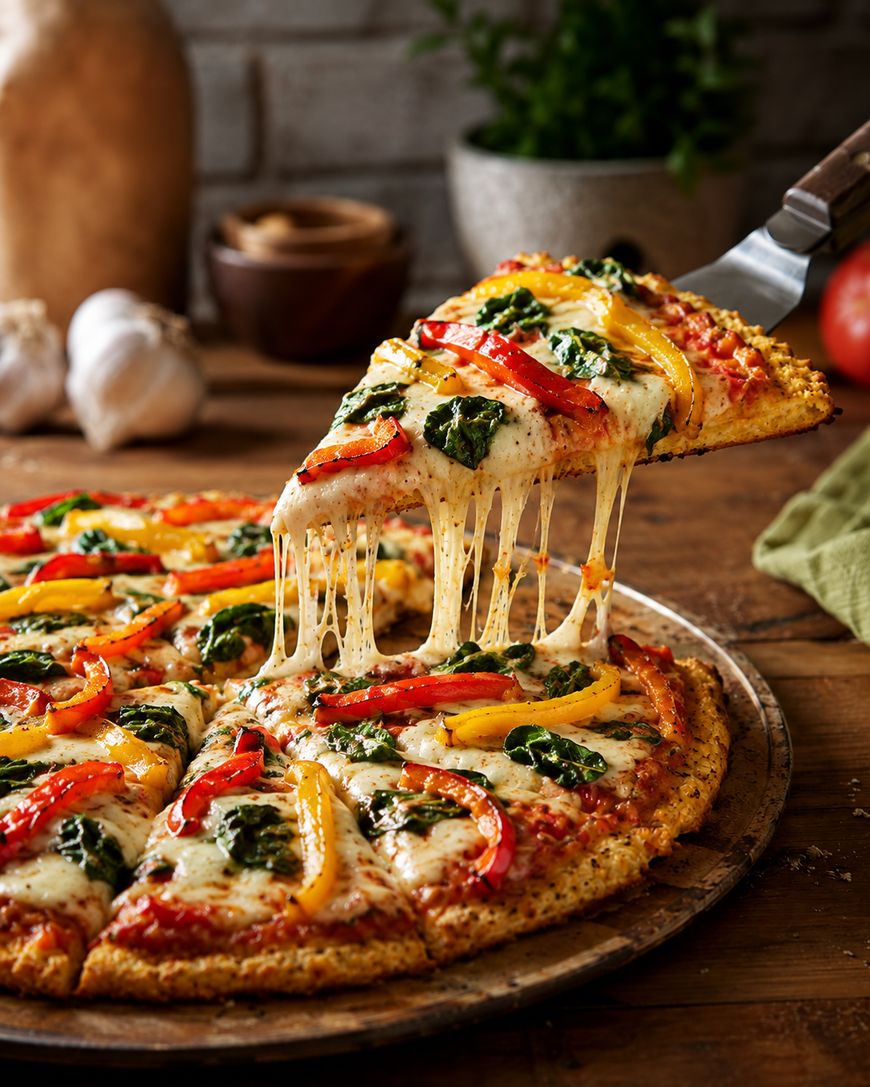
What began as a niche recipe on food blogs has since become a mainstream staple, showing up in grocery store freezer aisles across the country, though this homemade version gives you far more control over ingredients and flavor.
Ready to see the exact measurements and timing laid out step by step? The full recipe card below has everything you need to make this cauliflower pizza crust from start to finish.
Vegan Cauliflower Pizza Crust
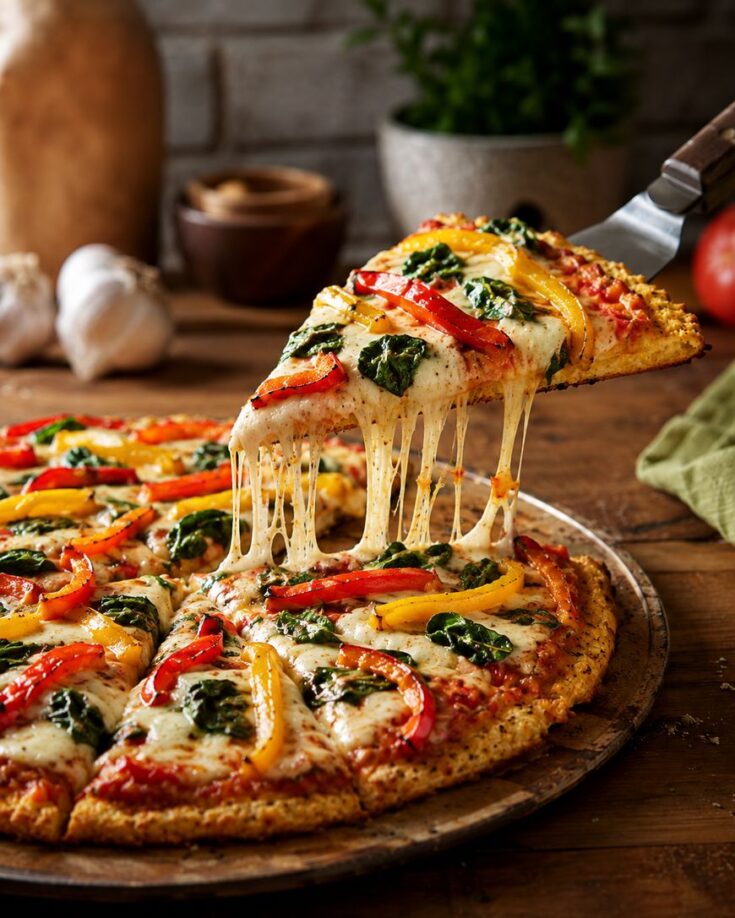
A crispy, foldable vegan cauliflower pizza crust made with riced cauliflower, almond flour, and a flax egg, ready to top with your favorite vegan toppings.
Ingredients
- 4 cups riced cauliflower (about 1 medium head)
- 1 tablespoon ground flaxseed
- 3 tablespoons water
- 1 cup almond flour
- 3 tablespoons nutritional yeast
- 2 tablespoons cashew cream
- 1 teaspoon garlic powder
- 1 teaspoon dried oregano
- 1/2 teaspoon fine sea salt
- 1/4 cup vegan mozzarella shreds, optional
- 1 tablespoon olive oil, for brushing
Instructions
- Whisk the ground flaxseed with the water in a small bowl and let sit for 5 minutes to form a flax egg.
- Steam the riced cauliflower for 5 to 6 minutes until tender, then spread on a baking sheet to cool for 10 minutes.
- Wrap the cooled cauliflower rice in a clean kitchen towel and squeeze firmly over the sink to remove at least 1/2 cup of liquid.
- Preheat the oven to 425°F and line a baking sheet with parchment paper.
- Combine the squeezed cauliflower rice, flax egg, almond flour, nutritional yeast, cashew cream, garlic powder, oregano, and salt in a large bowl and mix until a dough forms.
- Press the mixture into a thin, even 12-inch round on the prepared baking sheet, keeping the edges slightly thicker than the center.
- Bake for 20 to 25 minutes, until golden and firm enough to lift with a spatula.
- Brush the pre-baked crust lightly with olive oil, then add marinara, vegan cheese shreds, and desired toppings.
- Return to the oven and bake for another 10 to 12 minutes, until the cheese is melted and the edges are golden.
- Slice and serve warm.
Notes
For extra crispiness, bake on a preheated pizza stone. Store leftovers in an airtight container in the refrigerator for up to 3 days, and reheat in a skillet or oven to restore crispness.
Nutrition Information:
Yield:
4Serving Size:
1 slice (1/4 of crust)Amount Per Serving: Calories: 210Total Fat: 15gSaturated Fat: 2gSodium: 320mgCarbohydrates: 13gFiber: 5gSugar: 3gProtein: 8g
Frequently Asked Questions
Why is my cauliflower pizza crust soggy?
A soggy crust almost always comes down to not squeezing enough moisture out of the cooked cauliflower rice before mixing.
Make sure you remove at least a half cup of liquid and always pre-bake the crust before adding toppings.
Can I make this crust ahead of time?
Yes, you can pre-bake the crust up to two days in advance and store it in the refrigerator, then top and finish baking it whenever you are ready to eat.
This makes cauliflower pizza crust a great option for meal prep or entertaining.
Does cauliflower pizza crust taste like cauliflower?
Once baked, the crust takes on a mild, savory flavor thanks to the nutritional yeast and garlic powder, and most people notice the texture more than any lingering cauliflower taste.
The cashew cream also helps mellow out any vegetable flavor.
Can I use frozen riced cauliflower?
Frozen riced cauliflower works well and can actually save time, but thaw it completely and squeeze out the moisture just as you would with fresh.
Frozen cauliflower tends to release even more liquid, so budget a few extra minutes for this step.
Is this crust keto friendly?
Yes, this cauliflower pizza crust is low in carbohydrates and fits within a keto framework, especially when topped with keto-friendly vegetables and vegan cheese.
Always check the specific nutrition values in the recipe card against your personal daily targets.
Can I make individual personal pizzas instead of one large crust?
Absolutely, divide the mixture into four equal portions and shape each into a six-inch round for personal-sized pizzas.
Reduce the pre-bake time by about five minutes since the smaller rounds cook through faster.
Conclusion
This vegan cauliflower pizza crust proves that a lighter, plant-based base can still deliver a crispy, foldable slice you will want to make again and again.
Follow the moisture-squeezing step closely, use the recipe card for exact measurements, and you will have a reliable cauliflower pizza crust in your regular dinner rotation in no time.



Leave a Reply