This vegan alfredo sauce recipe is a dairy-free, creamy pasta sauce that mimics classic Alfredo using plant-based ingredients like nuts, tofu, or cauliflower. Most people should start with a simple cashew-based version because it blends smooth, tastes rich, and works with almost any pasta.
You’ll get the best results by building a neutral, creamy base first, then adjusting salt, acid, and thickness to match how you plan to serve it.
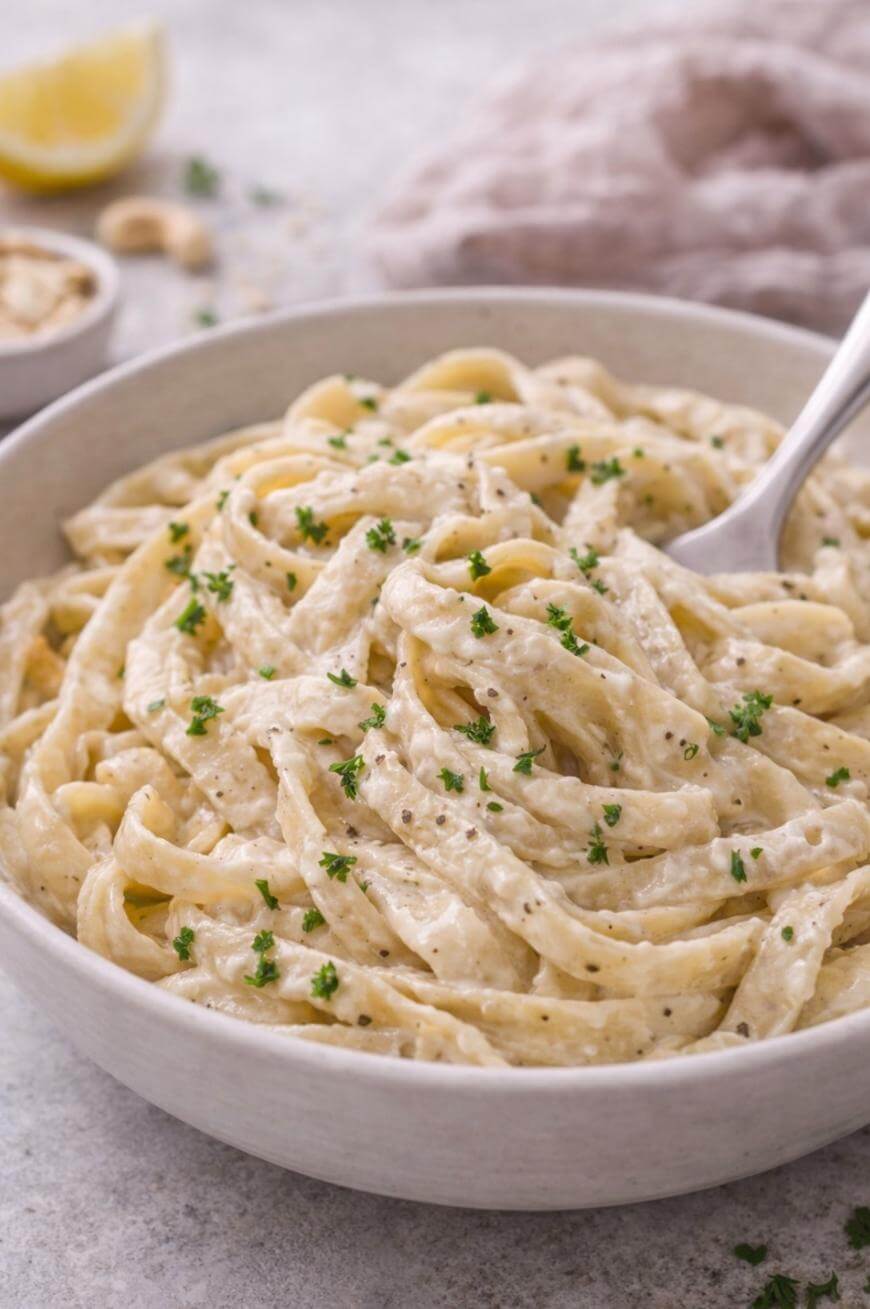
Ingredients For Vegan Alfredo Sauce Recipe
1. Base Ingredients For The Classic Cashew Version
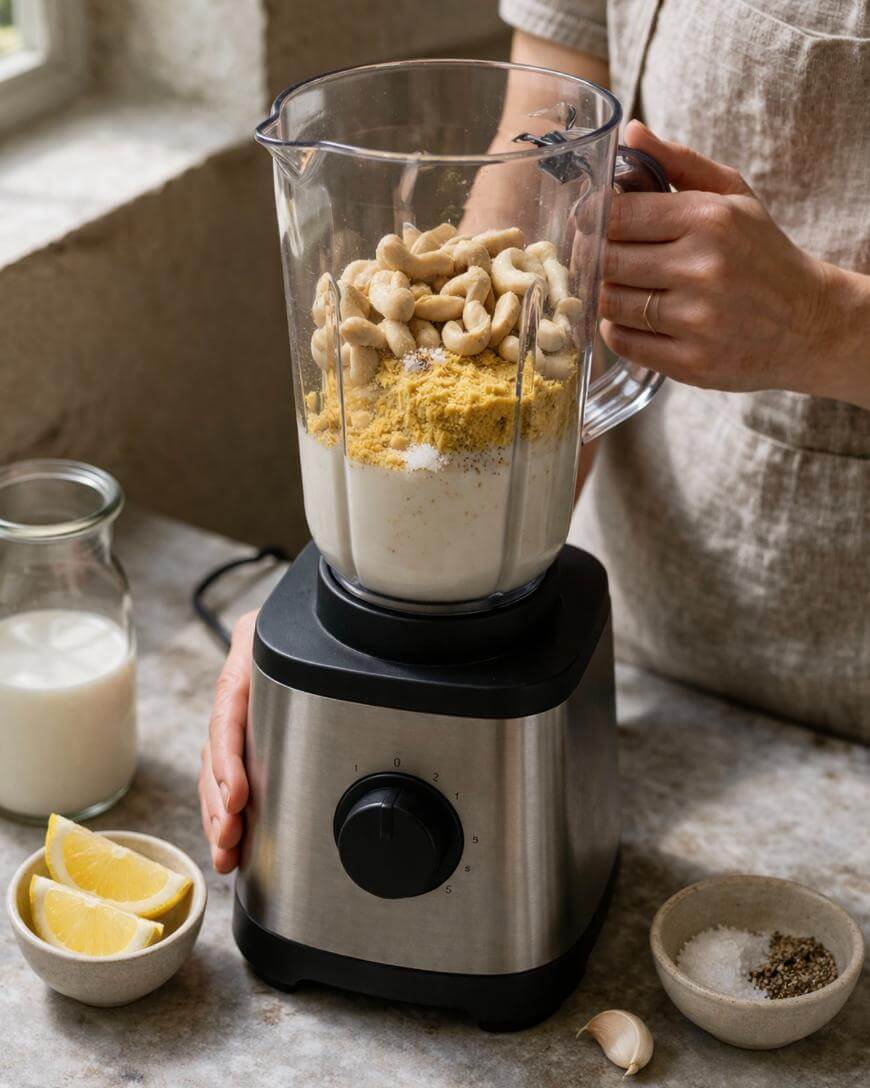
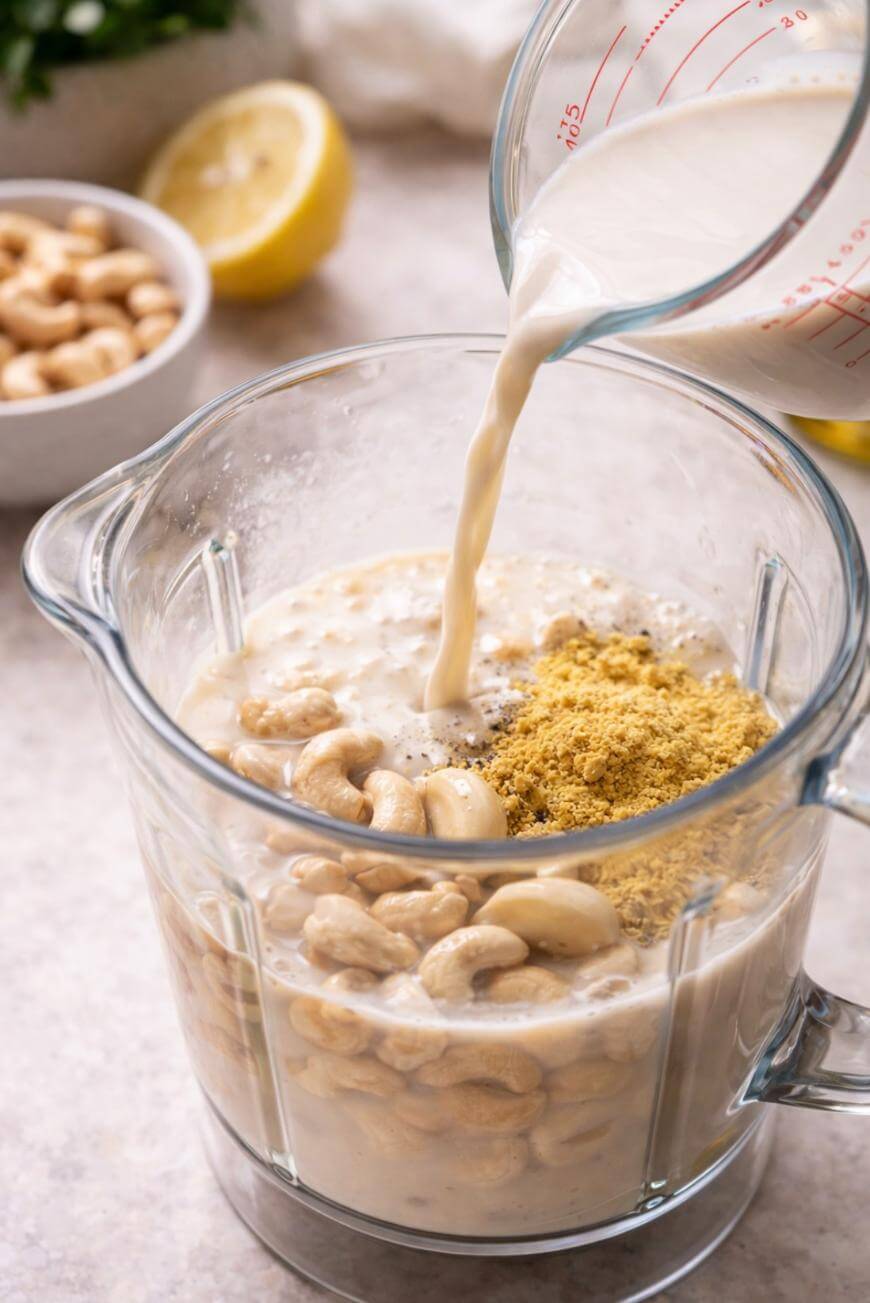
Use 1 cup raw cashews and 1 to 1.25 cups unsweetened plant milk or water for a thick, classic finish. Add 2 to 4 tablespoons nutritional yeast, 1 to 2 cloves garlic, 3/4 teaspoon fine salt, and 1/4 teaspoon black pepper.
For richness, add 1 tablespoon olive oil or vegan butter. For brightness, add 1 to 2 teaspoons lemon juice after blending so you can control sharpness.

2. Optional Add-Ins For More “Cheesy” Depth
Add 1/2 to 1 teaspoon white miso for aged, Parmesan-like depth. Add 1/2 teaspoon onion powder for a more classic, rounded savory note without onion flavor.
If you want more complexity, add a pinch of smoked paprika or a tiny pinch of nutmeg, but keep it subtle so it still reads like Alfredo.
3. Ingredients For A Nut-Free Silken Tofu Version
Use 12 ounces silken tofu and 1/2 to 3/4 cup unsweetened plant milk. Add 2 to 4 tablespoons nutritional yeast, 1 tablespoon olive oil, 3/4 teaspoon salt, and 1 to 2 teaspoons lemon juice.
If you want extra umami, add 1/2 teaspoon white miso and reduce salt slightly until you taste it after blending.
4. Ingredients For A Lighter Cauliflower Blend Version
Use 2 cups steamed cauliflower florets, 1/2 cup raw cashews, and about 1 cup plant milk or water. Add 3 to 5 tablespoons nutritional yeast, 1 to 2 cloves garlic, 1 teaspoon salt, and 1 to 2 teaspoons lemon juice.
If it tastes “vegetable-y,” increase garlic slightly and add a small drizzle of olive oil to round it out.
Vegan Alfredo Sauce Recipe: Base Method And Variations
5. Pick Your Base Style Before You Start
Cashews make the richest, most classic-style sauce, while silken tofu makes the fastest sauce, and cauliflower makes the lightest sauce. Choosing the base first prevents you from chasing texture later.
If you want the safest default, use cashews and keep tofu and cauliflower as variation options for budget or dietary needs.

6. Use A Clear Batch Size So You Can Adjust Correctly
A practical default batch is about 2 cups of sauce, which coats 8 ounces of pasta well. Thinking in a batch size keeps your seasoning adjustments predictable.
If you’re cooking for 4 people, plan 8 to 10 ounces of pasta and 2 to 2.5 cups of sauce, depending on how saucy you like it.

7. Measure A Reliable Cashew Ratio For Creaminess
For a thick, classic finish, use 1 cup raw cashews to 1 to 1.25 cups liquid. This ratio usually lands in the Alfredo zone without needing extra thickeners.
If you want a looser sauce for baked pasta, push liquid closer to 1.5 cups and simmer briefly to marry flavors.
8. Soften Cashews Fast With A Short Soak
A quick soak improves smoothness and reduces graininess, especially if your blender isn’t high-powered. A simple method is a 10-minute soak in boiling water.
If you skip soaking, plan to blend longer and consider straining if you want an ultra-silky finish.

9. Build Flavor With A Simple Core Seasoning Set
A reliable core set is garlic, salt, black pepper, and nutritional yeast for a cheesy edge. This combination reads Alfredo without trying to copy dairy exactly.
If it tastes flat, it usually needs either more salt or a small hit of acid, not more garlic.
10. Add A Fat Source To Make It Feel Like Alfredo
Alfredo tastes luxurious partly because of fat, so include one like olive oil or vegan butter. Even 1 tablespoon can shift the mouthfeel from “cream soup” to “pasta sauce.”
If you’re using tofu or cauliflower, fat is even more important because those bases can taste lean.
11. Vegan Alfredo Sauce Recipe Texture Check
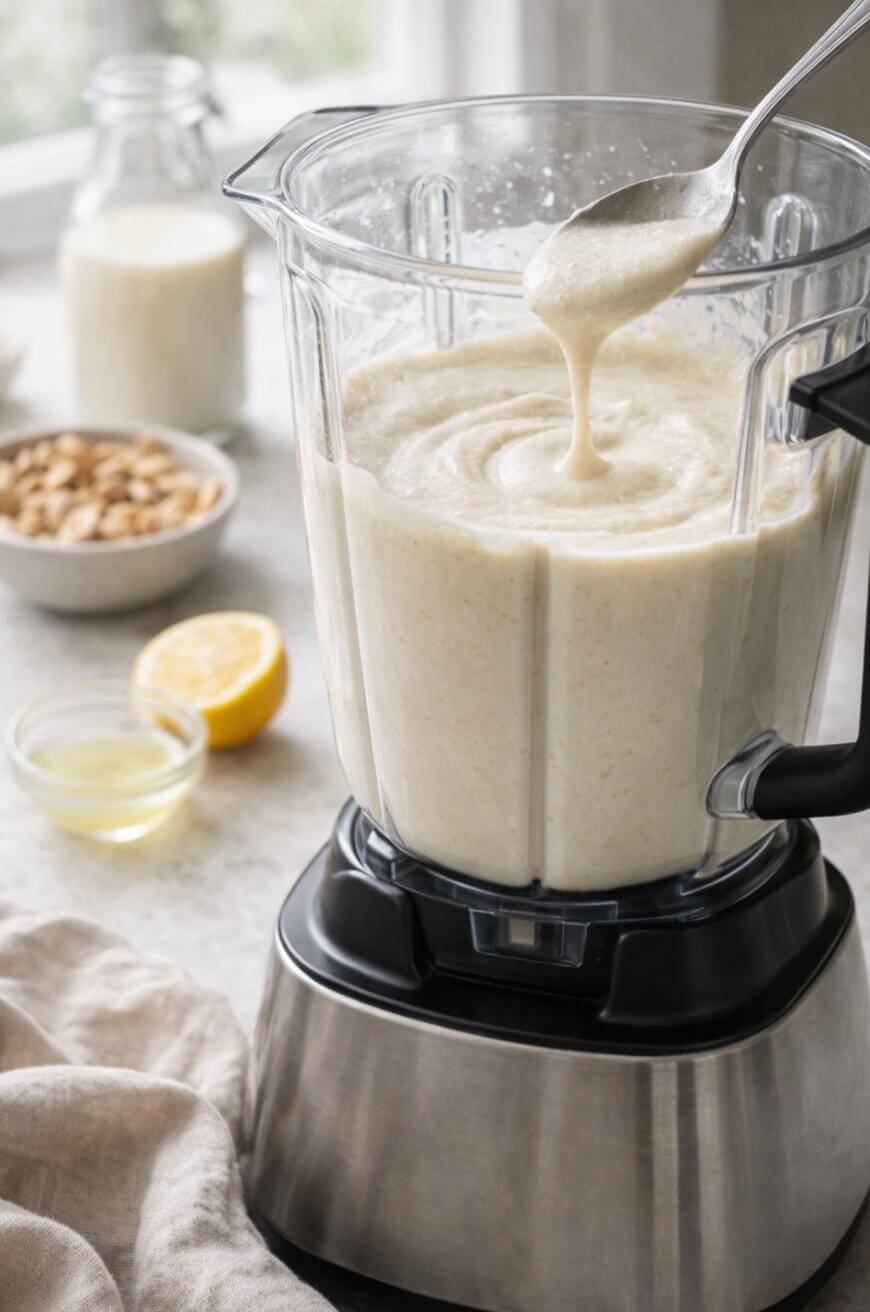
Your target texture should be thicker than heavy cream when hot, because it loosens as it warms and hits pasta. A good check is whether it coats the back of a spoon without running off immediately.
If it’s too thick, add liquid 1 tablespoon at a time and blend. If it’s too thin, simmer 2 to 4 minutes.

12. Use Lemon Juice Like A Brightness Dial
A small amount of acid makes the sauce taste more like dairy by lifting flavor and reducing heaviness. Start with 1 to 2 teaspoons lemon juice for a 2-cup batch.
If you add too much, correct it with a pinch of salt and a touch more fat rather than adding sugar.
13. Choose Nutritional Yeast Amounts That Stay Balanced
For a 2-cup batch, 2 to 4 tablespoons nutritional yeast is a solid range. Lower amounts taste subtle and buttery, while higher amounts taste more cheesy.
If your nutritional yeast is strong, start at 2 tablespoons and add after blending and warming.
14. Decide If You Want Onion Notes Or Pure Garlic
Onion powder gives a savory dairy background without tasting like onions, while fresh onion can dominate. If you want classic Alfredo vibes, use 1/2 teaspoon onion powder.
If you use fresh onion, sauté it first so it becomes sweet and disappears into the sauce.

15. Use A Starch Helper When You Need Extra Cling
If your sauce is smooth but slides off pasta, a little starch can fix it. Use 1 to 3 tablespoons reserved pasta water and toss vigorously.
If you need more thickening, whisk 1 teaspoon cornstarch into 2 teaspoons cold water, then simmer 1 to 2 minutes.
16. Blend Long Enough To Avoid Graininess
Smooth Alfredo depends on blend time, not just ingredients. Blend at least 60 to 90 seconds, rest 2 minutes, then blend again.
If you still feel grit, add a bit more liquid and blend longer rather than adding more solids.
17. Simmer Gently So It Stays Creamy
A gentle simmer thickens and melds flavor without scorching. Keep it at low heat for 3 to 6 minutes, stirring often.
If you boil hard, nut-based sauces can separate and tofu-based sauces can tighten, so keep the heat calm.

18. Make A Butter Note Without Dairy
A small amount of vegan butter or a tiny splash of vinegar mimics dairy roundness. Start with 1 tablespoon vegan butter per 2 cups.
If it tastes oily, you usually need a pinch more salt or yeast to balance the fat.
19. Add Parmesan-Like Depth With One Umami Ingredient
A tiny amount of miso, soy sauce, or mushroom powder creates aged depth. Use 1/2 to 1 teaspoon white miso and blend thoroughly.
If you use soy sauce, start with 1/2 teaspoon and reduce added salt until you taste the final sauce.
20. Keep It White By Choosing The Right Pepper
Black pepper is classic, but it speckles the sauce. If you want a bright white presentation, use white pepper instead.
If pepper tastes harsh, you either used too much or added it before simmering; adjust after warming.

21. Make It Garlic-Forward Without Raw Bite
Roasted garlic gives sweetness and depth without sharpness. Swap 2 to 4 roasted cloves for 1 to 2 raw cloves.
If you only have raw garlic, sauté it in a teaspoon of oil for 30 to 60 seconds before blending.
22. Add Cauliflower For A Lighter, Fluffier Version
Blend 2 cups steamed cauliflower with 1/2 cup cashews and about 1 cup liquid for a lighter sauce that still feels creamy. This version is great if you want a less rich finish.
If it tastes bland, cauliflower versions usually need more salt and yeast than you expect.
23. Plan One Protein Add-In So Dinner Feels Complete
Add protein like chickpeas, seitan, or sautéed mushrooms for texture and satisfaction. A practical target is 1/2 cup cooked protein per person.
If you’re meal-prepping, chickpeas hold up well for days, while mushrooms taste best freshly sautéed.
24. Toss Sauce And Pasta The Right Way For Maximum Coating
Combine hot pasta and warm sauce in the pan and toss for 30 to 60 seconds. This helps the sauce cling and prevents pooling at the bottom.
If it thickens during tossing, loosen with 1 to 2 tablespoons pasta water until it looks glossy.

25. Set A Realistic Cost Target Per Batch
A homemade batch often lands around $4 to $8 depending on cashew prices and add-ins, and it usually yields about 2 cups. Setting a cost target helps you choose cashews versus tofu.
If you want the cheapest reliable option, tofu-based sauce is typically the most budget-friendly.
26. Store It So It Reheats Smoothly
Store leftovers in a sealed container for up to 4 days in the fridge. The sauce thickens when cold, so plan to reheat with a splash of plant milk or water.
Warm it slowly over low heat and stir often to keep it creamy instead of broken.
27. Freeze Only If You Choose A Freeze-Friendly Base
Cashew and cauliflower versions usually freeze better than tofu versions, which can change texture after thawing. Freeze in small portions so you can thaw only what you need.
Thaw overnight in the fridge and re-blend if it looks separated, then adjust with salt and a few drops of lemon.
Key Takeaways
Pick one base first, then tune thickness and seasoning to match your pasta.
A 2-cup batch typically coats about 8 ounces of pasta well.
Cashews plus a short hot soak deliver the smoothest classic texture.
Salt and a small amount of acid usually fix flat flavor fastest.
Low heat and steady stirring prevent separation and grainy texture.
Reheat leftovers with a splash of liquid so the sauce turns silky again.
FAQ
Can You Make It Without Nutritional Yeast?
Yes, but the sauce will taste less cheesy and more like a creamy garlic sauce. You can add a little miso and extra salt to bring back savory depth.
Why Does Your Sauce Taste Bland Even When It’s Thick?
It tastes bland because it likely needs more salt or a small amount of acid, not more base ingredients. Add salt in pinches and finish with 1 teaspoon lemon juice, then taste again.
Can You Use Sweetened Plant Milk?
No, sweetened plant milk makes the sauce taste oddly dessert-like. Use unsweetened plant milk or water and add richness with olive oil or vegan butter instead.
What Pasta Works Best With This Sauce?
Fettuccine and linguine hold creamy sauces well because of their surface area. Short shapes like penne work too, but you may want a slightly thinner sauce so it fills the tubes.


Leave a Reply